
Who this guide is for: parents and caregivers of children aged about 18 months to 6 years who want to know why new physical skills matter, what to expect at each age, and how to help at home.
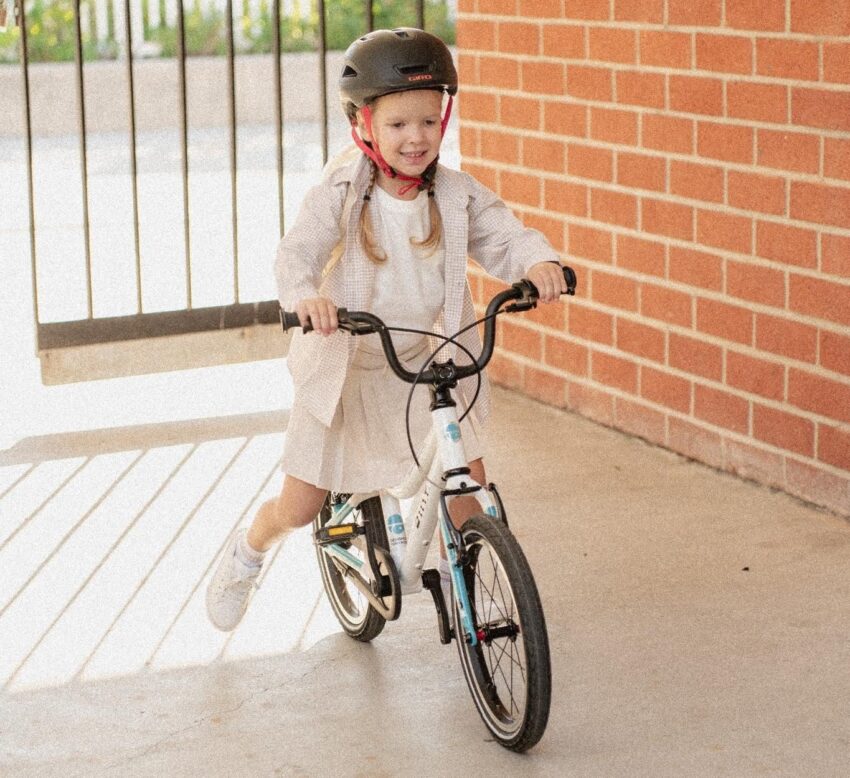
Key Takeaways
- New movement skills are the base for an active life. Children with stronger motor skills tend to be more active, fitter, and more at home in their bodies.
- Skill and activity feed each other. The more a child moves, the more skilled they get, and that makes moving more fun. The loop starts early.
- The link to thinking and school skills is modest. Some studies find one, especially for complex movement. Many find none.
- How a child learns matters too. Wobbling and trying again builds persistence and can support healthy self-esteem.
- Parents shape the setting. Daily active play, room to explore, and a ball or bike that fits now help more than drills ever will.
- Milestones are rough markers. They show what at least 75% of children can do by a given age, so a later start is common.
Why a wobble is worth more than it looks
Watch a three-year-old try to stand on one foot. They lift a leg, tip, grab your arm, laugh, and try again. Five minutes later they are counting “one, two” before they wobble.
That little scene is most of this article in miniature. A new movement trains more than muscles. Attention and patience get a workout too.
What counts as a physical skill? Gross motor skills, fine motor skills, and balance
Physical skills are movements a child learns to control on purpose, from climbing stairs to catching a ball. Most of the ones a young child learns are gross motor skills: whole-body movements powered by the large muscle groups of the legs, arms, and core. Fine motor skills use the small muscles of the hands and wrists for drawing, buttons, or puzzles. Both develop side by side through the first five years. By about age 3, many children can copy a circle and stack a small tower of blocks (Zubler et al., 2022, via MSD Manual). This article focuses on gross motor skills, but the two meet often. Catching a ball, for instance, requires both and relies on hand-eye coordination.
Researchers call the basic gross motor skills fundamental movement skills, and a child’s overall ability to perform them is motor competence. You may also see physical literacy, which adds the confidence and motivation to keep moving for life. They sort into three families:
| Skill family | What it means | Everyday examples |
| Balance (stability) | Keeping the body steady, still or moving | Standing on one foot, walking a curb, gliding on a balance bike |
| Locomotor | Moving the body from place to place | Running, jumping, hopping, climbing, skipping |
| Object control | Controlling something with hands or feet | Throwing, catching, kicking, steering handlebars |
All three rely on coordination (making body parts work together, like arms and legs when climbing) and spatial awareness (judging where the body is, like stopping before a wall). Most real activities mix all three families. Riding a bike needs balance to stay up, locomotion to pedal, and object control to steer and brake, which is why it is our running example.
Why are new physical skills important for child development?
New skills make moving easier and more fun, and children who find moving easy usually move more over the years, which adds up. Each benefit below comes with a note on how strong the evidence actually is.
1. They build the base for an active life
A child who can run, jump, catch and balance has more ways to join in, whether it is a game of tag or a family bike ride. The same abilities make everyday tasks easier, from climbing stairs to dressing while standing.
A major review found motor competence is positively linked with physical activity, cardiorespiratory fitness, muscular strength and endurance, and a healthy weight. It also flagged open questions about cause and effect (Robinson et al., 2015). How strong is this? The associations are consistent, but cause and effect remains unsettled.
That is why health guidelines focus on daily active play. U.S. guidelines say children aged 3 through 5 should be active throughout the day, with caregivers aiming for at least 3 hours of active play (ODPHP). The WHO sets the same 180-minute mark for ages 1–4, with at least 60 minutes of it more energetic from age 3 (WHO, 2019).
2. Skill and activity feed each other
It works like a loop. Moving more builds ability, which makes moving more appealing, which builds more ability.
In an Australian cohort, children who were more active in the preschool years had better motor competence when they started school, around age 5 (Barnett et al., 2016). A review of preschool studies found 8 of 11 reported a significant link between motor skills and physical activity, and noted that most preschoolers do not meet activity guidelines (Figueroa & An, 2017). Evidence: consistent across studies of young children.
3. They build confidence, self-esteem, and independence
Children form an early sense of “I am good at this” or “I am not a sporty kid.” Researchers call this perceived motor competence, and it matters because kids choose activities they believe they can do. Robinson’s review found that actual motor skill is positively associated with it (Robinson et al., 2015).
Each new ability also widens what a child can do without help. Ask any three-year-old who just climbed the slide ladder alone. Evidence: the research backs the link to perceived competence. The independence part is everyday observation.
4. Learning a movement is practice in persistence, often with other kids
No one learns to glide, hop, or catch on the first try. A child notices what went wrong, changes something small, and goes again. We call this the try-wobble-adjust loop. With movement, the feedback comes right away. The ball lands in their hands, or it doesn’t, and the bike either stays up or tips over. Young children can see their own progress here, and most of them love that.
Much of this practice happens alongside other children. Waiting your turn at the top of the slide, or sticking to the rules of tag when you would rather not, is early practice in getting along with others.
5. Thinking and school skills: possible, but modest
You may read that movement “boosts brain development.” The evidence is more mixed than that.
- A review of children aged 4–16 found no correlation, or not enough evidence, for many motor-cognitive links, but weak-to-strong evidence for some, especially complex motor skills and higher-order thinking (van der Fels et al., 2015).
- A review of randomized trials in 4–6-year-olds found physical activity programs improved both motor skills and cognitive development, though one trial found no improvement (Zeng et al., 2017).
- A 2024 review of long-term studies called the evidence for effects on executive functions and academic performance indeterminate (Hill et al., 2024).
Our reading: complex, coordinated play probably exercises some of the same planning and attention children use elsewhere. Still, no single activity is a shortcut to school success, and a bike certainly is not one. Movement earns its place through health, confidence and fun.
Motor skills development by age: 18 months to 6 years
Physical development starts at birth and moves fast through early childhood. Infants build the basics, like rolling, sitting and crawling. Toddlers (1–3 years) refine walking, running, and climbing. Preschoolers (3–5 years) add jumping, hopping and, for many, skipping.
The table pairs CDC movement milestones with easy ways to practice at home, and the riding step some children are ready for. Since 2022, CDC milestones mark what 75% or more of children can do by that age, not the average age (Zubler et al., 2022). Many children reach them sooner, and a few months later is common.
| Age | Movement milestone (CDC) | Easy ways to practice | Riding step some children are ready for |
| 18 months | Climbs on and off a couch or chair without help (AAP/CDC) | Cushion obstacle courses; walking on grass, sand and slopes | Walking a balance bike while seated, feet flat |
| 2 years | Kicks a ball; walks (not climbs) up a few stairs (CDC) | Chasing games, kicking a soft ball, stepping on and off curbs | Short strides on a balance bike |
| 2½ years | Jumps off the ground with both feet (AAP/CDC) | Jumping over a line, “frog” games, low climbing frames | Longer strides, first short glides |
| 4 years | Catches a large ball most of the time (CDC via Understood) | Catch with a big soft ball, throwing at a target, scooter rides | Steady gliding and steering |
| 5 years | Hops on one foot (CDC); many also start to skip (CHOC) | Hopscotch, skipping, monkey bars | Pedaling, braking and turning on a pedal bike |
| 6 years | No CDC checklist after age 5; skills from earlier ages gain speed and control | Longer walks and rides, ball games with simple rules | Longer family rides on paths |
Read the riding column as possibilities. The American Academy of Pediatrics advises against pushing a child onto a two-wheeled bike until they are ready, around age 5 or 6 (HealthyChildren.org). The AAP also notes that bikes with no pedals can help with balance when learning to ride (HealthyChildren.org). Either way, your child’s interest sets the pace. Our guide When Is My Child Ready to Ride a Bike? [LINK] covers readiness signs.
What shapes motor skills development?
Movement skills come from a mix of nature and experience. You cannot change the first, but you have a real say over the second.
- Children develop the movements their environment lets them practice. The WHO advises that young children not be restrained for more than 1 hour at a time (stroller, high chair, carrier) and that sedentary screen time for ages 2–4 stay under 1 hour a day (WHO, 2019).
- Variety helps. Grass, sand, stairs and slopes each ask the body for something slightly different.
- Sleep and nutrition count too. The WHO recommends 10–13 hours of good-quality sleep a day for 3- and 4-year-olds, naps included (WHO, 2019). Adequate nutrition supports healthy growth and gives children the energy to play.
- Genetics, body size, and growth spurts all play a part, as does temperament. Some kids jump straight in. Others watch for a long time first, which is normal (more on that below).
- So do the adults around them. A parent who joins in makes it much easier to keep going after the first wobble.
What if your child is cautious or afraid to try?
Many children watch a new activity for a long time before they try it. For a lot of them, watching is the first stage of learning. Pushing rarely speeds that up. A smaller challenge often does.
- Shrink the step. Try a curb before the climbing wall, or walking the balance bike before gliding.
- Go first while they watch. A parent who wobbles and laughs makes mistakes look survivable.
- Let them decide when to start, when to stop, and whether to hold your hand.
- Say what you see. “That looks high. Want to do the first step together?” lands better than “Do not be scared.”
- Count tries out loud. “You tried three times today” praises what your child can control.
- If today is not the day, try again in a few weeks.
If avoidance comes with missed milestones, clumsiness that stands out among peers, or pain, talk to your pediatrician (see below).
Learning to ride: how balance and coordination come together
Riding a bike looks like one skill. It is really a stack of four, each drawing on a different skill family. Children usually learn them in roughly this order:
- Balance. Keeping the bike upright while moving. This is the hardest layer, and the one a balance bike isolates. On it, the legs and core hold the body steady over two wheels while the feet stay close to the ground.
- Steering. Looking where you want to go and turning to get there. It uses hand-eye coordination and spatial awareness, starting with small corrections and moving to real turns later.
- Braking. Slowing and stopping on purpose, starting with the feet and later using a hand brake the child can reach and squeeze.
- Pedaling. Adding power. Once balance and steering are automatic, many children pick up pedaling quickly.
This is why riding can look so different from child to child. A four-year-old who glides confidently has already done most of the work. A five-year-old who has only ridden with training wheels may pedal well but still need to learn balance. Neither one is behind. They just learned the layers in a different order. Balance Bike vs. Training Wheels [LINK] explains how each approach builds the stack.
Most parents remember the first time their child rode ahead and stopped all by themselves.
What makes riding easier to learn
Fit is the part to get right. A bike that is too big or too heavy for a small child turns practice into a struggle. The AAP’s checks are simple (HealthyChildren.org):
- Seated with hands on the handlebar, the child can place the balls of both feet on the ground.
- Buy the size that fits now, not one to “grow into.” The AAP calls oversized bikes especially dangerous.
- For hand brakes, the child can comfortably grasp the lever and squeeze hard enough to stop.
- Pair every bike with a CPSC-certified helmet that fits snugly.
The AAP suggests bringing your child to try a bike before buying. If you shop online, measure your child’s height and inseam first and check the return policy before you order.
Proper sizing matters just as much for a toddler’s first balance bike. Your child should be able to sit with both feet flat on the ground. Look for a bike light enough for them to pick up on their own, with a seat height that adjusts as they grow within that size.
We size our bikes the same way, by height and inseam instead of age. The Biky Air 12 Balance Bike [LINK] is built for the balance-first stage, and Biky Finder [LINK] suggests a model based on your child’s height, inseam, and riding experience. For a first pedal bike, see the Biky Air 14.
How can parents support motor skills development?
Parents support motor skills development best by making daily active play easy and safe. Coaching matters much less. Young children learn movement mostly through play, so your job is to make room for it and stay close.
Do:
- Build movement into ordinary days. Walk to the park, take the stairs, play chase after dinner. It adds up toward the 3-hour mark faster than you would think.
- Mix it up. Something to climb, a ball, and a bike over one week already covers all three skill families.
- Make practice a game. A toddler who ignores “ride over there and stop” will happily do it again and again when it becomes “Can you stop before the line?” Smooth, flat ground is easiest for first tries.
- Wait a few seconds before you step in.
- Praise one specific thing, like “You looked up the whole way to the tree.” It tells a child exactly what to repeat.
- Get on a bike yourself, or kick the ball back. Kids copy what they see.
Avoid:
- Comparing with siblings or friends. It tends to make children give up.
- Rushing to the next stage. Taking off training wheels or adding pedals too early can set confidence back.
- Drilling through tears. If it stops being fun, stop for the day.
- Rescuing every fall. Small tumbles on soft ground are part of learning. Keep the area safe, then let them get back up on their own.
Indoor games for cold or rainy days
Clear a small space, and these cover all three skill families without leaving the living room:
| Game | How to play | What it practices |
| Cushion river | Lay pillows on the floor; jump from one to the next without touching the “water” | Jumping, balance |
| Tape tightrope | Put a line of painter’s tape on the floor; walk it forwards, backwards, on tiptoe | Balance |
| Balloon keep-up | Keep a balloon in the air with hands, then elbows, then knees | Hand-eye coordination, object control |
| Sock basketball | Throw rolled-up socks into a laundry basket; step back after each hit | Throwing, aiming |
| Animal walks | Bear crawl, crab walk, frog jump across the room | Strength, coordination |
| Freeze dance | Dance to music; freeze on one foot when it stops | Balance, listening |
For riding specifically, see How to Teach Your Child to Ride a Bike [LINK] and Transitioning from Balance Bike to Pedal Bike [LINK].
When should you talk to a pediatrician about motor skill delays?
A child can be ahead in one area and slower in another, and most timing differences are normal. A motor delay means a child reaches movement milestones noticeably later than most children their age.
Most slow starts even out with time and practice. Delays that persist are worth checking, because conditions such as developmental coordination disorder or cerebral palsy can affect how movement skills develop, and early support helps (Bremer & Cairney, 2018).
Talk to your pediatrician if your child is not meeting one or more milestones for their age, or if anything about how they move worries you. You do not need to wait for the next checkup. The CDC advises parents, “Do not wait” (CDC Milestone Moments), and revised its milestones in 2022 partly to discourage a wait-and-see approach (Zubler et al., 2022).
Your pediatrician can do a developmental screening and, if needed, refer you to a specialist or your state’s early intervention program. CDC’s free Milestone Tracker app helps you keep notes to bring. This article is general information and does not replace advice from your child’s doctor.
FAQ
What is the difference between gross and fine motor skills?
Gross motor skills use large muscle groups for whole-body movements like running, climbing, and riding. Fine motor skills use the small muscles of the hands and fingers for tasks like drawing, buttoning, and using a fork. Both are essential, and many activities, like catching a ball, require both to work together.
How much active play does a young child need?
U.S. guidelines say children aged 3 to 5 should be active throughout the day, with caregivers aiming for at least 3 hours of active play. The WHO recommends the same 180 minutes for ages 1–4, including at least 60 minutes of more energetic play from age 3. It can be spread across the whole day.
Do motor skills really help with learning at school?
Possibly, though less than many headlines suggest. Some trials in 4–6-year-olds found activity programs improved both motor and thinking skills. Reviews of longer-term studies still call the evidence for school results uncertain.
Is 2 too young to start on a bike?
Not for a balance bike, if your child is interested and the bike fits. The child sits and pushes along with flat feet, so at this age it is closer to walking than riding. The AAP advises not pushing children onto a two-wheeled bike before they are ready, which for many is around 5 or 6. A balance bike, with both feet near the ground, is a gentler start. Even so, let your child set the pace.
Do I need special equipment to help my child learn new physical skills?
No. Open space, a soft ball, stairs, and a playground cover most early skills. A balance bike or pedal bike adds one more skill stack, so pick one that fits your child now rather than one to grow into.