
A backyard BBQ runs on what’s in the cooler as much as what’s on the grill. Almost every guest list now includes someone who isn’t drinking that day, whether they’re driving home, pregnant, training for something or simply taking a break from alcohol. Handing that person a warm bottle of water is the fastest way to make them feel like an afterthought. This guide covers the alcohol-free drinks that actually work outdoors, how to match them with grilled food, how much to buy per guest, and 3 batch mocktails you can mix before anyone arrives.
Why Do Alcohol-Free BBQ Drinks Need a Real Plan?
Alcohol-free options usually disappoint for a structural reason: they’re treated as a backup rather than a menu. Beer gets cases, wine gets bottles, and the non-alcoholic side gets whatever soda was left in the pantry. Planning 2 or 3 real alcohol-free choices changes the experience, because a guest who isn’t drinking still wants something cold, complex and worth holding for an hour.
The harder part is rarely the guest list, it’s the shelf. Stocking a proper alcohol-free bottle still means knowing where to look, since most grocery aisles stop at one lager and a bottle of sparkling juice. Retailers like Upside Drinks carry non alcoholic gin next to alcohol-free beer and sparkling wine, so one order covers the whole cooler. That way the zero-proof side of the menu is settled before the grill is even lit.
Who Shows Up to a BBQ Wanting a Zero-Proof Option?
The designated driver is only one part of the group. Guests may be pregnant, on medication, managing a workout schedule the next morning, or moderating for personal reasons they don’t plan to explain at a picnic table.
Most of them won’t ask for anything. They’ll scan the cooler, find nothing built for them, and settle for tap water. A visible alcohol-free selection removes that awkward moment entirely, which is why hosts who plan for it rarely hear a request in the first place.
What Makes a Drink Work in Full Summer Heat?
Heat rewards drinks that stay refreshing as the ice melts. Acidity, bitterness and carbonation all survive dilution, while sweet juices and cream-based mixes turn cloying after 20 minutes in the sun.
Build around 3 qualities: high carbonation, a citrus or herbal edge, and enough dilution tolerance that a half-melted glass still tastes deliberate. Tall drinks over plenty of ice outperform small, concentrated pours at any outdoor event.
What Are the Best Non-Alcoholic Drinks to Serve at a BBQ?
Four categories cover almost every guest without turning your kitchen into a bar. Each one plays a different role, so stocking 2 categories is usually enough for a small BBQ, and 3 works for a crowd.
Which Alcohol-Free Spirits Hold Up in a Tall Drink?
Distilled alcohol-free spirits are the backbone of any serious zero-proof menu, because they bring the botanical bitterness that juice alone can’t produce. Juniper-forward options are the most versatile: topped with tonic, ice and a citrus wedge, they deliver the dry, slightly bitter finish that makes a drink feel adult.
Agave and smoky alternatives work well next to charred food, and alcohol-free aperitifs bring a bitter orange note that pairs with anything off the grill. Serve them in the same glassware as the alcoholic drinks. That single detail does more for a guest’s comfort than any explanation.
What Non-Alcoholic Beers Pair With Grilled Food?
Non-alcoholic beer is the easiest win at a BBQ, because it needs no mixing, no garnish and no glass. The category has moved well past the thin lagers of a decade ago, and brewers now release alcohol-free IPAs, wheat beers, stouts and sours built as their own products.
Keep the range simple:
- Lager or pilsner: the neutral default that suits burgers, dogs and chicken
- IPA: enough hop bitterness to cut through ribs and sausage
- Wheat beer: soft and citrusy next to grilled fish or salads
Which Alcohol-Free Wines Work Outdoors?
Sparkling alcohol-free wine is the strongest performer in the category, since bubbles and acidity compensate for the body that alcohol normally provides. A dry sparkling white or a sparkling rosé served very cold reads as celebratory, which matters if you’re toasting anything.
Still alcohol-free reds are trickier outdoors because they warm up fast and lose structure. If you want one on the table, chill it lightly and pour it alongside smoked meat, where the sweetness has something to push against.
What Role Do Sodas, Kombucha and Sparkling Water Play?
These are your volume drinks, not your feature drinks. Sparkling water, craft sodas and kombucha hydrate the crowd between the more interesting pours, and they double as mixers when someone wants to build their own glass.
Stock more of them than you think you need. Guests who aren’t drinking alcohol go through roughly twice the liquid over an afternoon, and running out of anything fizzy forces everyone back to the tap.
Which Alcohol-Free Drinks Pair Best With What’s on the Grill?
Pairing works the same way with or without alcohol: match intensity, then contrast texture. Grilled food brings smoke, char and fat, so the drink’s job is to reset the palate between bites.
Burgers, Ribs and Smoked Meat
Rich, fatty and heavily seasoned food needs bitterness or acidity to stay enjoyable after the third bite. An alcohol-free IPA, a juniper-heavy gin and tonic, or a bitter orange aperitif with soda all cut through fat effectively.
Avoid sweet mixes here. Barbecue sauce already carries sugar, and layering a sweet drink on top flattens both.
Chicken, Fish and Grilled Vegetables
Lighter proteins call for lighter drinks with a herbal or citrus profile. Dry sparkling alcohol-free wine, a wheat beer, or a cucumber and mint tonic all sit beside grilled chicken, shrimp and vegetables without overwhelming them.
A squeeze of lemon in both the food and the glass ties the plate together, which is the simplest pairing trick available to a host with 6 things on the grill at once.
How Do You Build a Self-Serve Drink Station Outside?
A drink station buys you back the time you’d spend playing bartender. Set a small table in the shade with glassware, ice, a pitcher of one batch mocktail, tonic and soda, a bowl of citrus wedges and fresh herbs, and the alcohol-free bottles standing in view.
Label the pitcher. Guests hesitate over unmarked drinks, and a folded card saying what’s inside is enough to get them pouring.
How Much Should You Plan Per Guest?
Plan on 3 to 4 drinks per guest for an afternoon BBQ, and add 1 more for anyone staying into the evening. Non-drinking guests tend to sit at the upper end of that range because they drink faster and refill more often.
For a group of 10 with 3 guests who aren’t drinking, that means roughly 12 alcohol-free servings plus a generous supply of sparkling water. Leftovers keep, so the risk of over-buying is much smaller than the cost of running dry.
How Do You Keep Everything Cold for Hours?
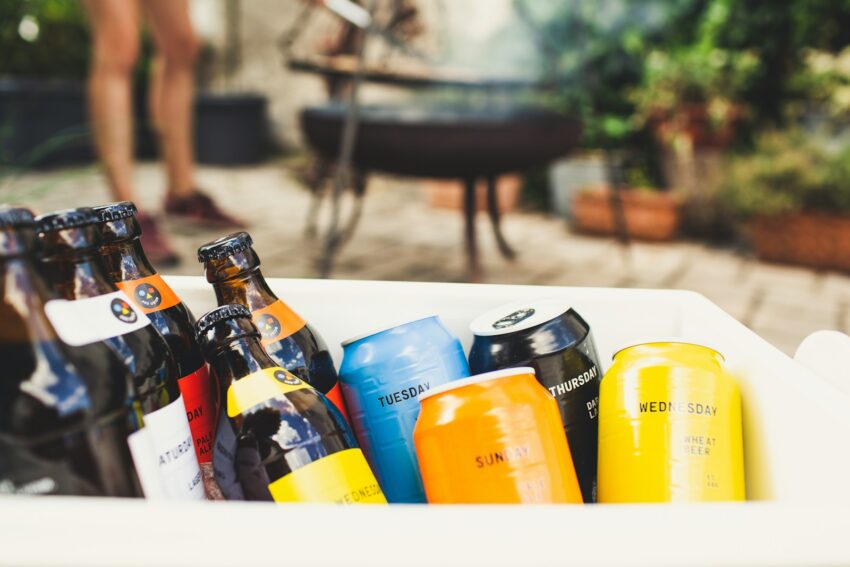
Use 2 coolers instead of 1. Keep the drinks people grab constantly in the accessible cooler, and reserve a second one, opened rarely, for the bottles you’ll serve later in the day.
Fill the gaps with ice rather than stacking bottles loosely, since air is what melts a cooler. Freezing a few water bottles the night before gives you cold packs that turn into drinking water once they thaw.
3 Batch Mocktails for a Backyard Crowd
Batching is the difference between hosting and bartending. Each recipe below fills a standard pitcher of about 8 servings, and all 3 can be mixed up to 24 hours ahead if you hold back the bubbles until serving.
Grilled Citrus and Zero-Proof Gin Spritz
Halve 3 lemons and 2 oranges, grill the cut sides for 2 minutes until they caramelize, then juice them into a pitcher with 1 cup of alcohol-free gin and a splash of simple syrup. Chill, then top each glass with tonic and ice.
The grilled citrus adds a faint smokiness that echoes the food, which makes this the pitcher to pour first.
Smoky Berry Cooler
Crush 2 cups of strawberries with the juice of 2 limes, stir in 1 cup of alcohol-free agave spirit and a pinch of smoked paprika, then strain into a pitcher. Top with soda water at the table.
The paprika sounds odd and tastes right. It gives the berries a savoury edge that stands up to ribs and brisket.
Cucumber Mint Tonic Pitcher
Muddle 1 sliced cucumber with a handful of mint, add the juice of 2 limes and 1 cup of alcohol-free gin, then fill with tonic just before guests arrive. Keep the mint whole rather than chopped so it perfumes the pitcher without turning bitter.
This is the lightest of the 3 and the one to serve alongside chicken, fish and salads.
Key Takeaways for Hosting a BBQ Without Alcohol
A BBQ without alcohol only feels like a compromise when nobody planned for it. Stock 2 or 3 real categories, favour carbonation and acidity over sugar, batch 1 pitcher before the first guest arrives, and use the same glassware for everyone.
Do that once and the question stops being what to serve the people who aren’t drinking. It becomes which pitcher to refill first.
Frequently Asked Questions About Alcohol-Free BBQ Drinks
What Can You Drink at a BBQ If You Don’t Drink Alcohol?
Alcohol-free spirits with tonic or soda, non-alcoholic beer, dry sparkling alcohol-free wine and batch mocktails all work at a BBQ. The best choices are tall, carbonated and lightly bitter, because they stay refreshing as ice melts in the heat.
How Many Non-Alcoholic Drinks Do You Need Per Guest?
Plan 3 to 4 drinks per guest for an afternoon, and 4 to 5 if the BBQ runs into the evening. Guests who aren’t drinking alcohol usually consume more liquid overall, so round up and keep extra sparkling water on hand.
Do Non-Alcoholic Spirits Taste Like the Real Thing?
They taste close, not identical. Alcohol carries aroma and adds warmth, so an alcohol-free spirit reads lighter on its own, but in a mixed tall drink with tonic and citrus the botanical profile comes through clearly and the difference narrows considerably.
Can You Batch Mocktails the Day Before a BBQ?
Yes, with one adjustment. Mix the base of juice, alcohol-free spirit and syrup up to 24 hours ahead and refrigerate it, then add tonic or soda water only as you pour, since carbonation goes flat overnight.