
For a long time, I couldn’t trust my own mind.
My mood fluctuated constantly. I felt completely powerless over my erratic emotions. But I knew that I wasn’t “crazy.” I was convinced that there had to be something behind my lack of productivity and mood fluctuations.
My problem was that I was quite reluctant to seek help, mostly because of laziness. The thought of making massive, dramatic life changes, like stopping late-night brain-rotting, felt completely undoable to me.
So, I decided to focus on what felt possible—self-discovery, productivity apps. After doing a little research, I wanted to try an app that offered a variety of tools so I could experiment and see what I liked.
That search led me straight to the Breeze Wellbeing app, and here is my completely honest review. My main requests were, “Can the Breeze app make me feel better about myself, and can it teach me something new about my mental well-being?”

What Is the Breeze App?
Breeze is a daily self-discovery app designed to help users better understand their feelings and apply this knowledge in practice. It has been on the market for 6+ years and has accumulated 16+ million downloads.
Over the past 6+ years, the average app rating on iOS and Android has been 4.5/5. This, along with the fact that professional therapists are involved in creating the app, sold it to me.
In the Breeze app, you can do this:
- Journaling: Freewriting, gratitude prompts, calming anxiety, and releasing worry.
- Quizzes: A collection of 30+ quizzes about mental health, personality, and entertainment. A quick Breeze test can be the beginning of a journey of self-discovery.
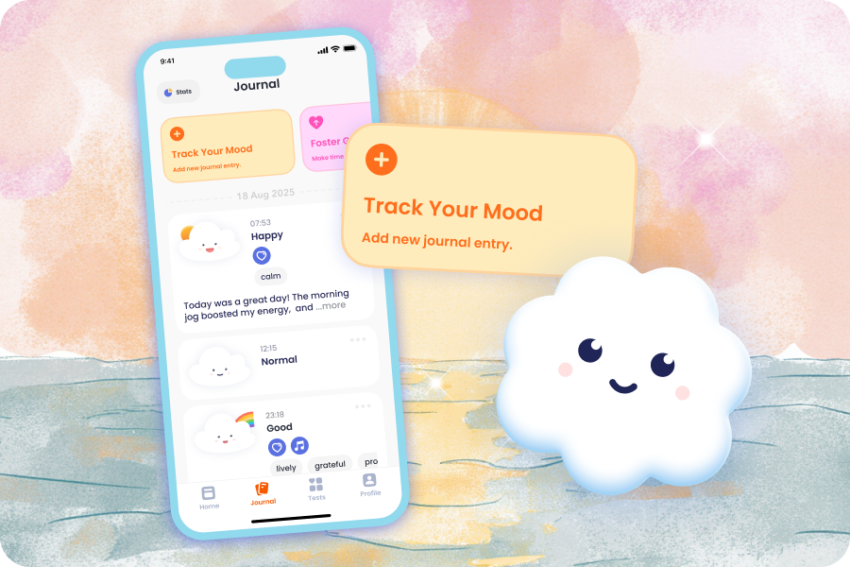
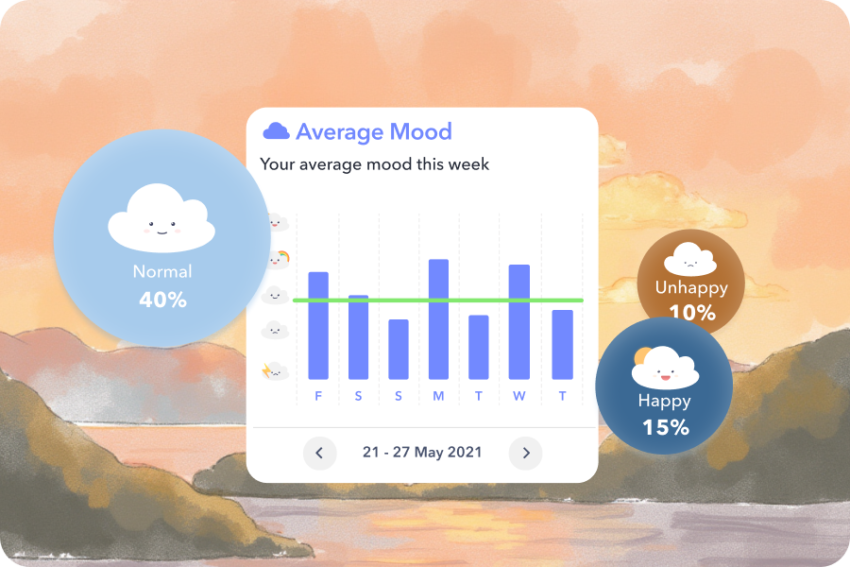
- Mood tracking: Here, you can evaluate your mood on a happy-unhappy scale, log feelings and activities, and add photos (spoiler: it was the most helpful feature for me, as someone who experiences mood fluctuations).
- Routine planner: The app offers preset activities to choose from and lets you create your own tasks to build to-do lists and monitor productivity.
- Affirmations: 90+ statements to change the negative self-thinking.
- Games: 3 games to practice mindfulness and breathing in a gamified way, suitable for those who are brain-rotted.
- Insights: Articles written by experts, where Breeze users comment and communicate with each other.
I also found that the Breeze app was featured in the App Store’s prestigious “New Apps We Love” section. For me, it was a testimony of trust and accessibility. What’s more important to me than official recognition is users’ feedback. Let’s explore it.
Try-Breeze.com Reviews from Other Users
Before downloading the app, I spent time scrolling through try-breeze.com reviews from real users. Several specific testimonials resonated with my situation and gave me the push I needed to give it a shot:
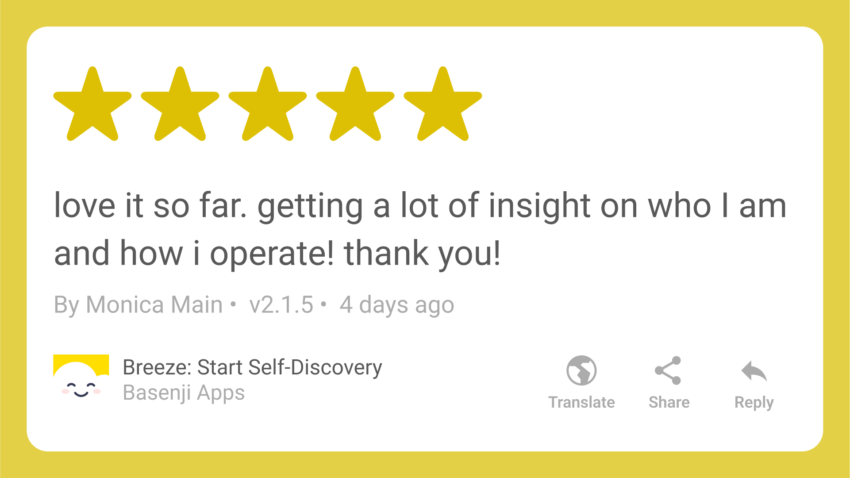
This user highlighted how much insight they gained regarding their daily behavior. This spoke directly to me, feeling disconnected from my actions. I know one thing: have these values and act completely differently. I started wondering whether the Breeze app could have the same effect for me.
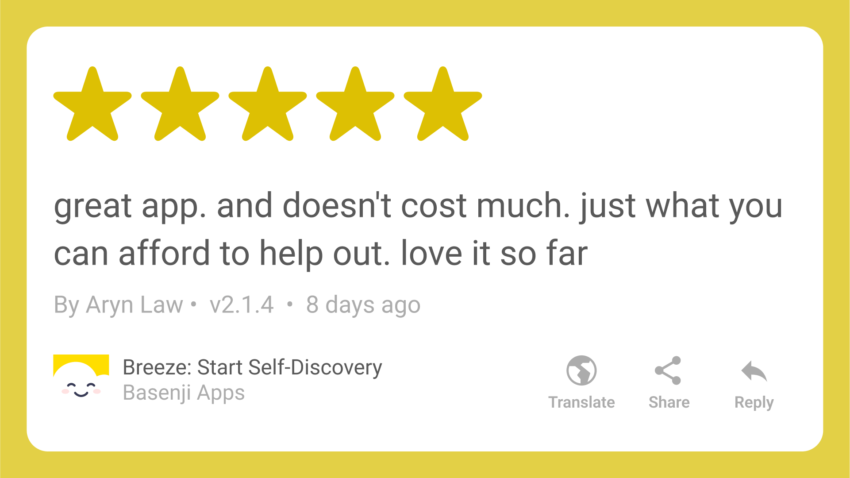
We love a helpful, cost-effective app. To be honest, price is an important factor for me in choosing any apps. I was relieved to discover that most of Breeze’s features are free. I didn’t want to commit to an expensive subscription without knowing that it’d work for me.
I ended up buying a paid version, and the pricing was fair. I will discuss it more in detail in the “Pros.”
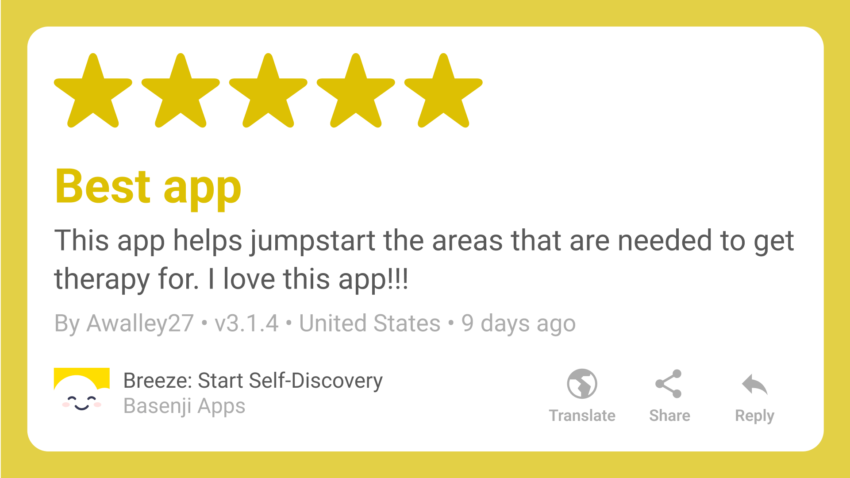
A third person noted that using Breeze helped jumpstart things they needed therapy for. This is interesting because although I don’t consider apps to replace therapy, I know that professional mental health services aren’t as accessible as they should be.
I, for example, am too overwhelmed to jump straight into therapy. Therefore, I’m glad that we live in an age where self-help tools are so accessible that we can simply download them to get through until we get specialized help.
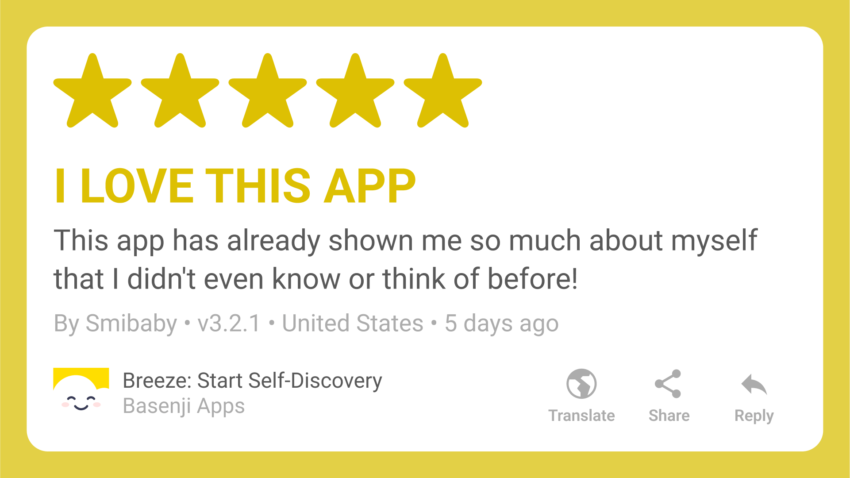
This Breeze reviewer appealed to my curiosity because I’m genuinely interested in what I still don’t know about myself.
My Honest Pros and Cons of the Breeze App
I used the Breeze Wellbeing for nearly two weeks. In this time, I have tested all the features and was able to test things in the long run. Here’s what I think Breeze’s apps’ biggest advantages and drawbacks are:
Pros
- Effortless setup and friendly interface.
One reason I was reluctant to seek change was that I was afraid of feeling “dumb” when therapists, support groups, and apps would use obsessively scientific language.
In the Breeze app, I didn’t find that. Even the self-discovery tests about mental health were super straightforward. The healing plans were written like instructions: specific steps and tips without psychological shenanigans.
I’m more of those people who focus on the action, not on uncovering how and why I ended up where I am.
- Journaling and mood tracking—my favorite features.
I liked journaling, which I didn’t think I would ever say. I think for me, it worked out that journaling was combined with mood tracking. The exploration of my emotions seemed more grounded than trying to pour my soul out with pen and paper.
When I was taking time to think about my emotions, it felt like I really put effort into my mental health. I felt really productive after daily journaling and mood tracking.
The biggest benefit for me was that I saw correlations between some of my behaviors/activities and my mood in the next few days. The app does a great job in summarizing these daily logs.
- Self-discovery quizzes as entertainment
Self-assessments were easily one of the most enjoyable aspects.
The humorous, brief quizzes really hit the spot. I completed the tests about humor style, true zodiac signs, personality accentuations, and more.
I found these tests amazing icebreakers. When I was meeting with friends the other day, I mentioned, “Hey, did you know that I was a Virgo? I’m actually an Aquarius. ” Then, it got picked up, and we just had a great time.
The tests that concerned mental health tests did include helpful disclaimers and post-test guidance on what to do with your results.
- Affordable premium access.
The overall cost of the subscription was reasonable. As far as I’m concerned, the subscription price ranges from $15 to $30, depending on the region.
If I had tried the exact same features of Breeze—mood tracking, guided journaling, and personality assessments—in other apps, it would have ended up significantly more expensive.
Cons
- Increased screen time.
A major issue I am currently trying to manage is my excessively high screen time. At the moment, my average screetime a day sits well over seven hours a day.
Although spending time on a self-discovery app is a healthier alternative to brain-rotting on social media, using phones for mental health feels a bit counterproductive to me.
However, this is the healthiest thing I can do for myself currently. Maybe I’ll have more inner will in the future to take my self-care from phones to the real world.
- Forced empathetic tone.
I fully recognize and respect the necessity of neutral, highly empathetic language in mental health spaces. This is just not for me when I’m being repeatedly told that “it’s not my fault” or that “I deserve more.”
Maybe this isn’t my style of communication. Or maybe I’m yet to believe in the reality of these messages.
The Bottom Line: Did Breeze Wellbeing Meet My Expectations?
Yes, Breeze Wellbeing definitely met my expectations. I had two requests, and two were satisfied:
- To feel better about myself, which I do. Whenever I put in my daily mood logs or take self-discovery tests, I feel that I am doing something nice and productive for myself. I’m glad that I’m investing more time in being with myself and my emotions, instead of ignoring them and then dealing with the consequences.
- To learn about mental well-being, which I did. I learned a lot of practical information about the importance of self-care and tips to build better routines.
But the main lesson for me was that self-care is important. And it’s not that difficult. It doesn’t need to be romanticized. Literally, doing whatever makes you feel inspired and happy works. Use it!
Whether it was purely the app itself or just the fact that I was finally putting effort into caring for myself, the change was there.
What Breeze undeniably helped me with was trying out a variety of instruments I would have never explored otherwise, from short breathing exercises to guided journaling. I discovered that I’m actually not as bad at self-reflection as I thought.
The mood tracking feature is in the absolute top tier for me. This and my regular check-in taught me the most about why I feel the way I feel. My initial request was to find out why I get mood fluctuations all of a sudden, and it seems I’ve found the answer.
I definitely plan to keep using Breeze and testing out its other features, though it has made me wonder: should I get a physical diary, too?