
If you’re building a wood fence in Newcastle, you’re going to run into a question that every homeowner in the Pacific Northwest faces sooner or later: shadow box or board-on-board? Both styles look great, both offer decent privacy, and both have loyal fans. But when it comes to handling Newcastle’s relentless rain and damp conditions, one of these designs has a real advantage.
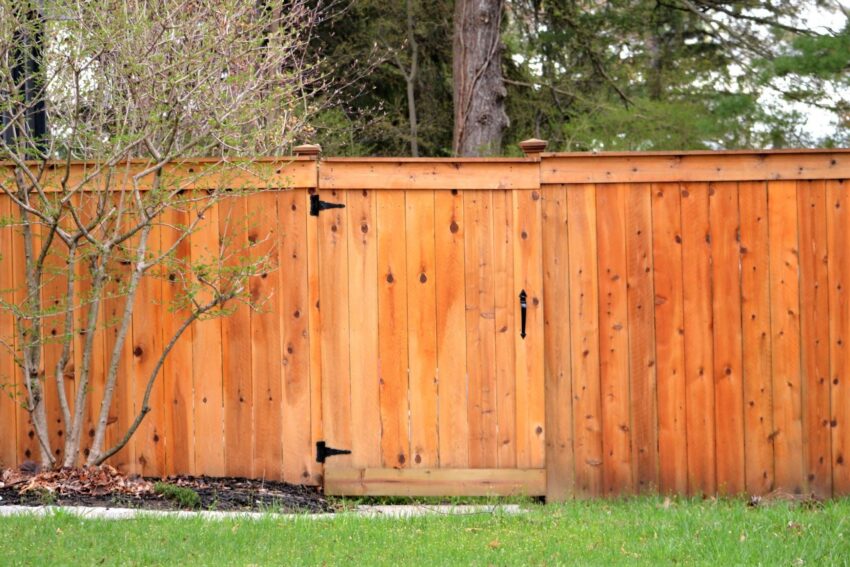
Let’s break down how shadow box fences and board-on-board fences actually perform when they’re soaked by months of PNW drizzle, and which one makes more sense for your property.
What Makes a Shadow Box Fence Different From Board-on-Board
These two fence styles look similar from a distance, but they’re built differently — and that difference matters a lot in Newcastle’s climate.
Shadow Box Construction
A shadow box fence alternates pickets on opposite sides of the horizontal rails with a gap between them. If you look at it from straight on, it appears solid. But when you view it at an angle, you can see through the gaps. The boards don’t overlap — they’re spaced apart with open air between them.
This design creates an attractive fence that looks finished from both sides, which is why it’s sometimes called a “good neighbor” fence. Your neighbor gets the same view you do, with no ugly rail side.
Board-on-Board Construction
A board-on-board fence also places pickets on alternating sides of the rails, but the boards overlap each other. There’s no gap — each board covers part of the one next to it. This eliminates any sightlines through the fence, even at an angle.
Board-on-board fences still allow air to pass between the overlapping boards, but they provide significantly more privacy than shadow box designs. They also have a more substantial, layered look that many Newcastle homeowners prefer.
How Newcastle’s Climate Tests Your Fence
Newcastle gets roughly 37 inches of rain per year, and most of it falls between October and April. That’s six straight months where your fence is regularly wet. Add in the fog that rolls up from the valleys, the moss that grows on anything standing still, and the occasional ice storm, and you’ve got conditions that will expose every weakness in a fence design.
The biggest enemy isn’t the rain itself — it’s the moisture that gets trapped. Wood that can’t dry out between storms starts to rot from the inside. Fungal growth takes hold in dark, damp spaces where air can’t circulate. This is where the structural differences between shadow box and board-on-board fences really come into play.
Airflow: The Hidden Factor That Determines How Long Your Fence Lasts
Here’s what most homeowners in Newcastle don’t realize when they’re picking a fence style: airflow is the single most important factor in how long a wood fence lasts in the Pacific Northwest.
Shadow box fences have open gaps between the boards. Air moves freely through these gaps, which means the wood dries faster after each rainstorm. Moisture doesn’t sit on the surface or collect between boards. This constant airflow is a genuine advantage in a climate where your fence might not see direct sunlight for weeks at a time during winter.
Board-on-board fences restrict airflow more because the overlapping boards create covered spaces where moisture can linger. However — and this is important — they still allow significantly more air movement than a fully solid fence. The overlap creates small channels where air passes through, which means board-on-board designs dry faster than flat solid panels.
In Newcastle’s climate, both styles outperform solid board fences when it comes to moisture management. But shadow box fences have the edge in pure airflow.
Privacy: Where Board-on-Board Wins Clearly
If privacy is your main reason for building a fence, this comparison gets straightforward fast. A shadow box fence in Newcastle might look private from your back door, but your neighbors walking along the fence line can see right through the gaps at an angle.
Board-on-board eliminates this problem completely. The overlapping boards block sightlines from every angle. You get true visual privacy without sacrificing all of your airflow. For Newcastle properties where homes sit close together — especially in the hillside neighborhoods along Coal Creek Parkway — board-on-board is usually the better choice for homeowners who want genuine screening.
Appearance From Both Sides
One major advantage that both shadow box and board-on-board fences share: they look good from your neighbor’s side too. Unlike a standard flat-board fence where one side shows the rails and posts, both of these styles present a finished face in both directions.
This matters in Newcastle neighborhoods where community aesthetics are important. Nobody wants to be the neighbor with the ugly side of the fence facing out. Both designs solve this gracefully, which is one reason they’re so popular across Newcastle, Bellevue, and Mercer Island.
Shadow box fences tend to have a lighter, more open feel. Board-on-board fences look more substantial and layered. Both age beautifully in cedar, developing that classic Pacific Northwest silver-gray patina over time.
Cost Differences Between the Two Styles
Board-on-board fences use more lumber than shadow box fences because the boards overlap. You’re essentially adding extra pickets to cover those gaps. Depending on the length of your fence and the width of the overlap, this can add 15 to 25 percent more material cost compared to a shadow box design.
Labor costs are similar for both styles since the installation process is comparable. The main cost difference comes down to the extra wood. For a typical Newcastle backyard fence running 150 to 200 linear feet, the difference might be a few hundred to a thousand dollars.
If you’re working within a tight budget but still want a fence that handles the rain well, a shadow box fence gives you good performance for less money. If privacy is your priority and you can stretch the budget, board-on-board is worth the extra investment.
Which Style Handles Moss and Mildew Better
Moss loves Newcastle. It grows on roofs, sidewalks, driveways, and yes — fences. Both shadow box and board-on-board fences will develop moss on the north-facing side eventually, but shadow box fences tend to resist it slightly better because of that superior airflow.
Board-on-board fences can develop mildew in the overlap zones where moisture lingers. Regular cleaning and the occasional application of a mildew-resistant sealant will keep this under control. Cedar’s natural oils help fight fungal growth, which is another reason it’s the preferred wood for both styles in the Pacific Northwest.
The team at Optima Fence and Deck recommends treating both styles with a quality water-repellent stain within the first year of installation. This simple step can add years to your fence’s life regardless of which design you choose.
Making the Right Choice for Your Newcastle Property
Here’s the honest answer: both styles work well in Newcastle’s climate, and both are far better choices than a flat solid-board fence in a rainy environment. Your decision should come down to priorities.
Choose a shadow box fence if you want maximum airflow, lower cost, and you’re comfortable with partial privacy. Choose board-on-board if full privacy matters to you and you’re willing to invest a bit more upfront for a fence that blocks all sightlines while still breathing.
Either way, work with an installer who understands how Newcastle’s terrain and weather affect fence performance. Properties here vary dramatically — a fence on a sheltered lot near the top of Newcastle Hills faces different conditions than one down in the Coal Creek corridor. If you’re exploring options for professional wood fence installation near Bellevue, make sure your installer evaluates your specific site before recommending a style.
Homeowners across Newcastle, Bellevue, and Kirkland consistently find that investing in the right fence style for their specific conditions pays off for years to come.
Frequently Asked Questions
Does a shadow box fence provide enough privacy for Newcastle yards?
A shadow box fence provides moderate privacy. It looks solid when viewed straight on, but people walking at an angle along the fence line can see through the gaps between boards. If your neighbors are close or you spend a lot of time in your backyard, you may find the privacy level insufficient. Board-on-board is the better choice if full privacy is a priority.
How long does a cedar shadow box fence last in Newcastle’s climate?
A well-built cedar shadow box fence in Newcastle typically lasts 15 to 20 years with proper maintenance. The open design promotes good airflow, which helps the wood dry quickly after rain and resist rot. Applying a water-repellent stain every two to three years and keeping moss off the boards will help your fence reach the upper end of that range.
Is board-on-board fencing more expensive than shadow box in Newcastle?
Yes, board-on-board fences generally cost 15 to 25 percent more than shadow box fences because they require more lumber. The overlapping boards use extra pickets to eliminate gaps. For a standard Newcastle backyard, this difference usually amounts to a few hundred to a thousand dollars more for the board-on-board option.
Can I mix shadow box and board-on-board styles on the same property?
Absolutely. Many Newcastle homeowners use board-on-board fencing along the sides and back of their property where privacy matters most, then switch to shadow box or a more open style along areas where they want airflow and a lighter feel. A good fence installer can blend the two styles seamlessly using matching wood and consistent post spacing.
Which fence style handles wind better in Newcastle?
Shadow box fences handle wind better because the gaps between boards allow air to pass through rather than catching it like a sail. Board-on-board fences, while more solid, still allow some wind to pass through the overlapping boards. Both styles handle wind significantly better than solid flat-board fences, which take the full force of Pacific Northwest windstorms.