
When you agree to bring a dog into your family, this often comes with your kids promising to walk them every day. That enthusiasm is real, but so is the gap between a child’s intentions and their actual capacity to follow through. The good news is that pet care can become one of the most effective tools you have for teaching responsibility, empathy, and consistency — as long as the tasks you hand your child match their age and abilities. Below, you’ll find a practical, age-by-age breakdown of pet chores, along with tips for setting your child (and your dog) up for success.
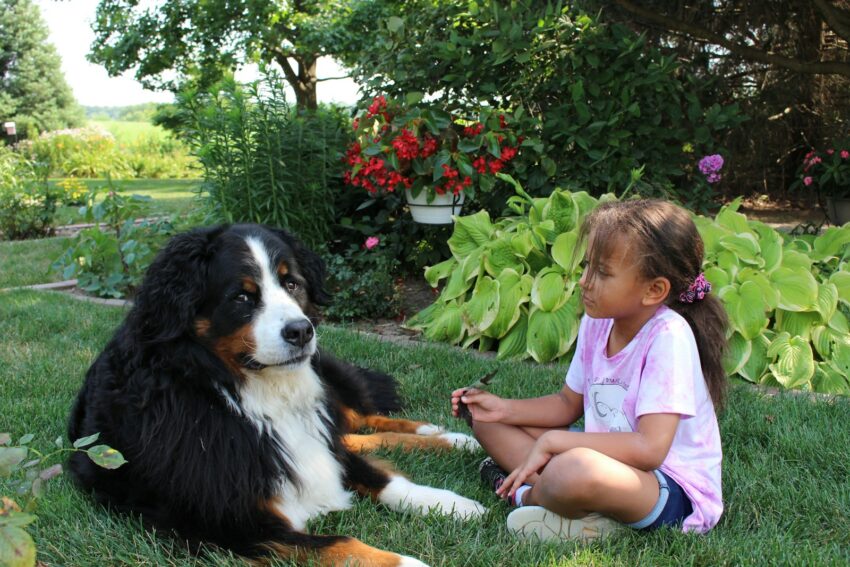
It’s Important to Teach Your Kids to Care for Your Dog
When you give your child a real role in your dog’s daily routine, you’re teaching them that another living creature depends on them, which builds empathy in a way that few other chores can. You’re also creating natural opportunities to practice follow-through, since a dog’s needs don’t pause for a bad mood or a busy afternoon.
The key is not to hand over too much responsibility too soon. A task that’s too advanced will frustrate your child and put your dog at risk; a task that’s too simple won’t hold their interest. Matching the chore to the developmental stage is what makes the system work.
Toddlers and Preschoolers (Ages 2 to 4)
At this age, your child shouldn’t be responsible for your dog’s care, but they can absolutely be included. Supervised participation teaches gentle handling and lays the groundwork for later responsibility. Appropriate tasks include:
- Helping you pour kibble into the bowl (with you controlling the amount)
- Holding a brush while you guide their hand during grooming
- Helping you fold or carry a clean dog blanket.
Keep every interaction supervised, and use this stage to model calm, respectful behavior around your dog. Children absorb far more from watching you than from any chore chart.
Early Elementary (Ages 5 to 7)
Once your child can follow multi-step instructions and has better impulse control, you can start assigning small, semi-independent tasks. This is a good age to introduce a consistent feeding schedule, where your child fills the bowl at the same time each day under light supervision. You might also let them refill the water bowl, help brush your dog’s coat, or take a short lead on a leash while you walk alongside. Consistency matters more than complexity here. A predictable routine helps your child understand that pet care isn’t optional — it happens every day, regardless of mood or schedule.
Tweens (Ages 8 to 12)
This is often the stage where you can meaningfully hand over daily responsibilities. Kids in this range can typically manage feeding independently, including reading portion guidelines on the packaging and measuring accurately. It’s also a good time to talk with your child about what actually goes into a healthy diet, since many popular dog foods contain fillers and preservatives that offer little nutritional value.
Some families use this conversation as a chance to introduce fresher options together; services where you can order fresh healthy dog food online make it easier to involve kids in reading ingredient lists and understanding portion sizes without the guesswork. Brands like California Dog Kitchen provide high-quality, human-grade food for your dog in portioned cubes.
Beyond feeding, tweens can usually handle solo leash walks in safe, familiar areas, basic grooming like brushing and nail checks, and cleaning up after your dog in the yard.
Teens (13 and Up)
By the teenage years, most kids are capable of handling the majority of your dog’s care independently, provided they’ve built the habits in earlier stages. This includes managing feeding schedules without reminders, taking your dog on longer walks or runs, scheduling and attending vet visits with a parent, and recognizing signs that something is off, like a change in appetite or energy level.
Teens can also take the lead on researching your dog’s nutritional needs, comparing food options, and adjusting portions as your dog ages or their activity level changes. If your family has been using a fresher, more transparent food option like California Dog Kitchen, this is a natural age to let your teen take over ordering and tracking deliveries, reinforcing both responsibility and an understanding of what quality nutrition actually looks like.
Keeping the System Consistent Across Ages
Regardless of your child’s age, a few principles hold true. First, pair every new responsibility with a demonstration — show before you delegate. Second, build in check-ins, especially in the first few weeks of a new chore, so small mistakes don’t become habits. Third, avoid using pet care as a punishment or reward, since this can create resentment toward the dog rather than the desired sense of duty. Finally, revisit responsibilities every six to twelve months. Kids grow quickly, and a chore that felt like a stretch last year might be too easy now, leaving room for something more challenging.
Raising a child who genuinely cares for the family dog doesn’t happen through a single conversation or a chore chart taped to the refrigerator. It happens gradually, through small, age-appropriate responsibilities that build on each other over years. Start with what your child can handle today, stay consistent, and adjust as they grow. The result is not just a well-cared-for dog, but a child who understands what it means to be reliably responsible for another living being.