
West Seattle’s residential streets are lined with some of the most character-rich homes in the Pacific Northwest. From the storybook Craftsman bungalows of the Alaska Junction to the tidy 1920s cottages dotting Admiral and Alki, the architecture here tells a story — and the right iron fence in West Seattle’s Craftsman neighborhoods can add a chapter without rewriting the book. Choosing an iron fence that honors the home’s original character while standing up to Seattle’s relentless moisture takes a little thought, but the results are worth it.
Why Iron Fencing Works With Craftsman Architecture
Craftsman homes are defined by their emphasis on natural materials, handcrafted details, and clean horizontal lines. The style emerged in the early 1900s as a reaction against the ornate Victorian excess that preceded it. West Seattle’s Craftsman neighborhoods — particularly around Morgan Junction, Gatewood, and the north end of Fauntleroy — are full of homes that embody this philosophy.
An iron fence in West Seattle’s Craftsman districts works because iron shares the same design DNA as the homes themselves. It’s honest, structural, and built to last. Unlike vinyl or composite materials, iron has the weight and texture that Craftsman architecture demands. A well-designed iron fence feels like it belongs with the tapered columns, exposed rafter tails, and river rock foundations that define these homes.
The key is restraint. Craftsman style values simplicity over ornamentation. The iron fence styles that work best here avoid the curlicues and elaborate scrollwork associated with Victorian or European estate fencing. Instead, they rely on clean vertical pickets, modest finials, and gentle arched top rails that echo the home’s rooflines without competing for attention.
Iron Fence Styles That Complement West Seattle Homes
Flat-Top Picket With Simple Finials
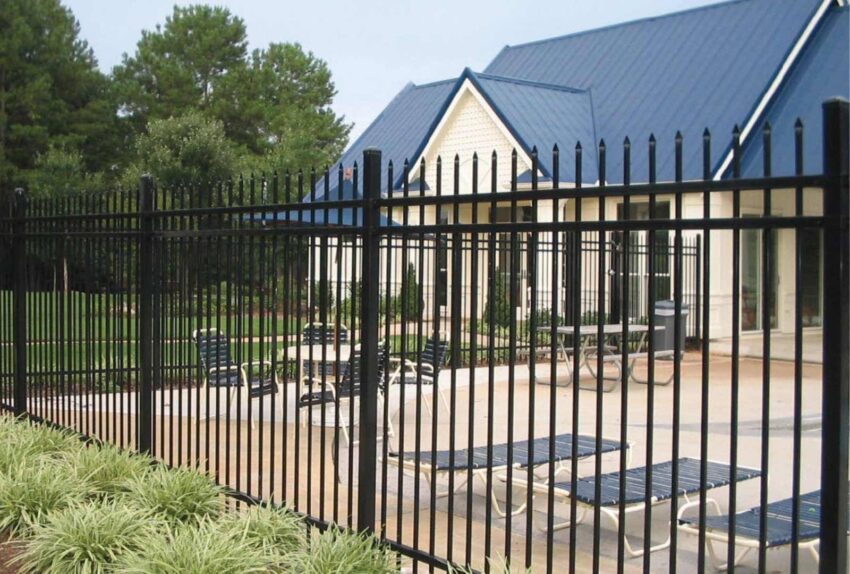
This is the most versatile iron fence style for West Seattle’s Craftsman and bungalow neighborhoods. Straight vertical pickets topped with small spear or ball finials create a clean, understated boundary that lets the home and landscaping take center stage. The flat top rail keeps the horizontal emphasis that Craftsman design favors.
This style works equally well for front yard borders and side property lines. In neighborhoods like Genesee Hill and Seaview, where lots are compact and homes sit close to the street, a flat-top iron fence provides definition without making the property feel boxed in.
Arched-Top Panels
For homeowners who want a touch more character, arched-top iron fence panels add gentle curves that mirror the arched windows and doorways found on many West Seattle Craftsman homes. The arch is subtle — typically rising just three to four inches above the top rail at center — but it adds enough visual interest to elevate the fence from functional to architectural.
This style pairs particularly well with homes in the Alaska Junction area, where larger Craftsman homes from the 1910s and 1920s often feature arched entry porches and curved brackets. Matching the fence’s arch to these existing details creates a cohesive street-facing appearance.
Puppy Picket With Reduced Spacing
West Seattle is one of the most dog-friendly neighborhoods in all of Seattle, and many homeowners need a fence that keeps small pets contained without sacrificing the open, welcoming aesthetic of their Craftsman property. Puppy picket iron fencing uses standard-height pickets with reduced spacing — typically two to three inches between bars instead of the standard four — to prevent small dogs from squeezing through.
The beauty of this approach is that it maintains the traditional iron fence appearance while solving a practical problem. From the sidewalk, a puppy picket fence looks nearly identical to a standard iron fence. It’s a smart option for Ballard and West Seattle homeowners who want both containment and curb appeal.
Iron and Stone Combination
Some of West Seattle’s most striking Craftsman properties pair iron fencing with low stone or masonry walls. The stone base — typically 18 to 24 inches high — echoes the river rock or clinker brick foundations common on early 1900s homes. Iron pickets rise from the stone base, creating a substantial boundary that feels anchored and intentional.
This combination is more expensive than standalone iron fencing, but it creates a dramatic curb appeal boost for corner lots and prominent street-facing properties. If your West Seattle Craftsman has existing stone retaining walls or rock garden borders, extending that material into a fence-and-stone combination ties the whole property together.
Protecting Iron Fencing From Seattle’s Moisture
The biggest concern with an iron fence in West Seattle’s Craftsman neighborhoods — or anywhere in the Pacific Northwest — is rust. Seattle’s climate delivers constant moisture from rain, marine fog, and overnight condensation. Without proper protection, bare iron will develop surface rust within months.
Modern iron fencing addresses this with multi-layer protective coatings. The standard process involves hot-dip galvanizing (which bonds a layer of zinc to the steel for corrosion resistance) followed by powder coating in the color of your choice. This combination creates a barrier that holds up for 15 to 20 years in Seattle’s climate before needing a refresh.
Black is the classic color choice for iron fencing on Craftsman homes, and it’s the most popular option in West Seattle. Dark bronze and deep green are secondary choices that complement specific home colors and landscaping palettes. Whatever color you choose, make sure the powder coating is outdoor-rated and UV-stabilized — cheaper coatings can fade and chalk within a few years under Pacific Northwest conditions.
Installation Considerations for West Seattle Properties
West Seattle’s topography creates some unique installation challenges. Many properties sit on hillsides with slopes that require stepped or racked fence panels. A stepped installation follows the slope in stair-step increments, while a racked installation angles each panel to follow the grade continuously. Racking generally looks better on Craftsman properties because it maintains the horizontal flow that the architecture emphasizes.
Soil conditions vary across West Seattle. Properties closer to the waterfront in Alki tend to have sandier soil, while lots in the higher elevations around Westwood and Roxbury have heavier clay. Both require adequate post depth and concrete footings, but the digging and drainage approach differs. An experienced Seattle fencing contractor will assess your specific soil conditions before quoting the job.
For iron fence West Seattle Craftsman projects, working with a contractor who understands both the architectural context and the technical requirements is essential. Rare Bears Fencing has installed iron fencing across West Seattle and surrounding neighborhoods, and their team knows how to match the fence style to the home’s character while engineering it for the PNW climate.
Cost Expectations for Iron Fencing in West Seattle
Iron fencing is a premium material, and pricing reflects that. For a standard residential iron fence in West Seattle — typically 36 to 48 inches tall for front yards, or 60 to 72 inches for full perimeter applications — expect to pay between $35 and $75 per linear foot installed.
The wide range accounts for differences in picket style, spacing, finial type, and any custom design elements. A simple flat-top picket fence sits at the lower end. Custom arched panels with decorative finials and stone base integration push toward the higher end.
For a typical West Seattle front yard with 60 to 100 linear feet of fencing, budget between $2,500 and $7,500 depending on the style. Full perimeter installations on larger lots can reach $15,000 or more. These numbers include posts, concrete footings, and powder-coated finish.
If you’re exploring options for an iron fence installation that matches your home’s Craftsman or bungalow character, getting an on-site estimate is the best way to nail down accurate pricing for your specific property and design preferences.
Frequently Asked Questions
What iron fence style looks best on a Craftsman home in West Seattle?
Simple flat-top picket fencing with modest spear or ball finials is the most popular choice. It respects the clean, horizontal lines that define Craftsman architecture without adding unnecessary ornamentation. Arched-top panels also work well on homes with arched windows or entry porches, creating a cohesive architectural look.
Will an iron fence rust in Seattle’s rainy climate?
Not if it’s properly finished. Modern iron fencing is hot-dip galvanized and powder-coated, creating a dual-layer barrier against moisture. This finish typically lasts 15 to 20 years in the Pacific Northwest before needing a touch-up. Avoid bare or painted-only iron, which can develop surface rust within months in Seattle’s constant dampness.
How tall should an iron fence be for a West Seattle Craftsman front yard?
Most West Seattle homeowners choose 36 to 48 inches for front yard iron fencing. This height provides a defined property boundary and keeps the home visible from the street, which is important for maintaining the welcoming curb appeal that Craftsman neighborhoods are known for. Taller options — 60 to 72 inches — are more common for side yards and backyards where privacy is a priority.
Can iron fencing be installed on a sloped West Seattle lot?
Yes. Iron fence panels can be either stepped (stair-step increments following the slope) or racked (angled to follow the grade continuously). For Craftsman properties, racked installation usually looks better because it preserves the horizontal lines the architecture emphasizes. Your contractor should assess the slope and recommend the best approach during the estimate visit.
How does the cost of iron fencing compare to wood or vinyl in West Seattle?
Iron is the most expensive common fencing material. It typically runs $35 to $75 per linear foot installed, compared to $25 to $45 for cedar wood and $30 to $55 for vinyl. However, iron’s lifespan with proper maintenance can exceed 30 years, and its impact on curb appeal and property value often justifies the premium — especially on Craftsman and bungalow homes where architectural character matters.