
Confession time: for the first couple of years of homeschooling, art was the subject that always slid off the end of our day. Math got done. Reading got done. Art stayed a nice idea on my planning page, week after week after week. If that sounds familiar, this post is for you, because we finally cracked it, and it took way less than I thought it would.
I think most of us skip art for the same three reasons. We do not feel qualified, because stick figures are the ceiling of our own abilities. We dread the mess, because homeschool days are chaotic enough already. And Pinterest has convinced us that art time needs to end with something frame worthy, which adds pressure nobody needs. All three of those reasons kept me stuck, and all three turned out to be wrong.
You Don’t Teach Art, You Make Space for It
The mindset shift that changed everything for us: my job is not to teach art the way I teach fractions. My job is to put out supplies, protect the time, and stay out of the way. Process over product, as the early childhood people say. Once I stopped needing every session to produce something impressive, art time stopped feeling like a performance and started feeling like a break, for the kids and for me.
Why Watercolor Is the Homeschool Medium
We tried a bit of everything, and watercolor is what stuck. It is cheap, and homeschool budgets are real. Cleanup is a jar of water and a wiped table, not a solvent situation. It is forgiving, because half of watercolor is letting the water do its own thing. And there is no prep, which matters, because any subject that needs twenty minutes of setup will quietly disappear from our schedule. Sound familiar?
Here is what our actual routine looks like. Friday afternoons, after lunch, twenty to thirty minutes. Everyone paints, including me, which turned out to matter more than I expected. When the kids see me making a lopsided barn and laughing about it, the pressure drains right out of the room. Some weeks we follow a tutorial, some weeks it is free painting, and some weeks we tie it to something we are already learning. We treat it like an appointment, because loose plans lose to laundry every single time.
Fair warning, the first session might flop. Ours did. Somebody cried because the colors ran, somebody painted three lines and declared themselves done, and I questioned the whole plan. Push through to week three before you judge it. Painting is a skill with a warm up curve, and so is sitting quietly with your own thoughts, which might be the more valuable skill of the two.
If you are teaching multiple ages, art might be the easiest subject you have. Same supplies, same table, same prompt, wildly different results, and nobody needs a different curriculum level. My youngest does washes and blobs that she narrates like a nature documentary, while my oldest works on getting shadows right. Nobody is ahead or behind in art, which is a relief in a house where someone is always comparing.
Tie It to What You’re Already Learning
This is where art earns its keep in a homeschool. Nature study: paint the leaves and feathers you collected on your walk instead of just pressing them into a book. History: try illuminated letters when you hit the Middle Ages. Geography: paint the flag or a landscape from whatever country you are studying. Even narration works. My kids paint a scene from our read aloud while I read, and their retelling afterward is noticeably richer. Art stops being one more subject and starts being the glue between subjects.
For the Days You Have No Ideas
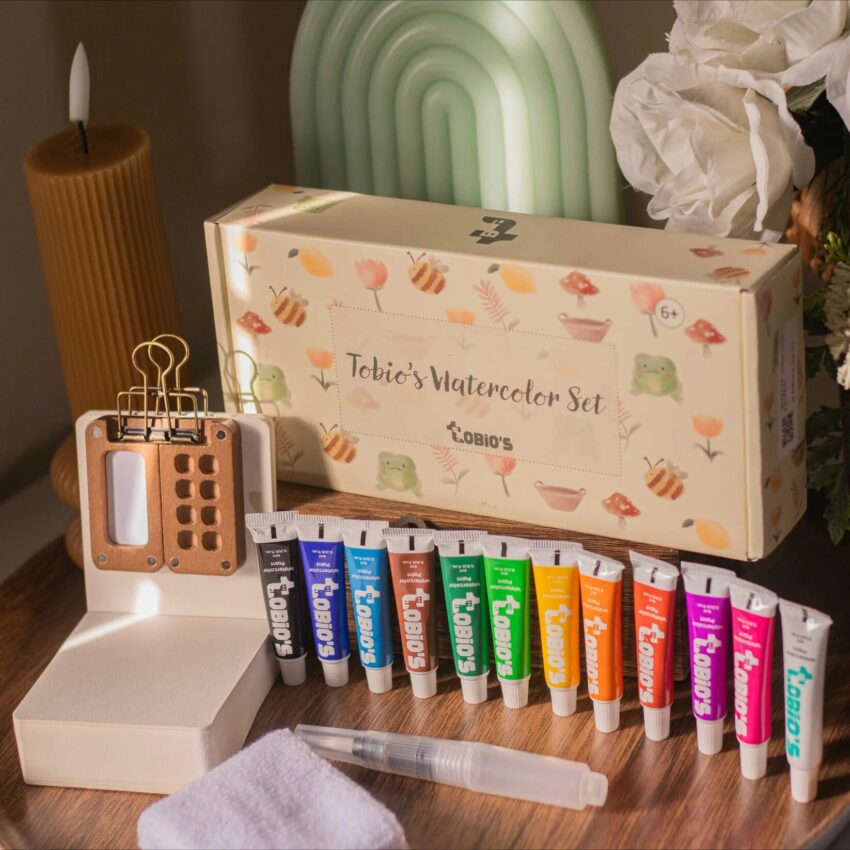
Some Fridays I have a plan. Most Fridays I do not, and that is where tutorials save us. We have been using the free step-by-step watercolor tutorials from Tobios, which are short, honestly beginner friendly, and assume zero experience, which is exactly my level. I queue one up, we all paint along at our own speed, and I get to be a student next to my kids instead of the teacher for half an hour. Highly recommend that feeling.
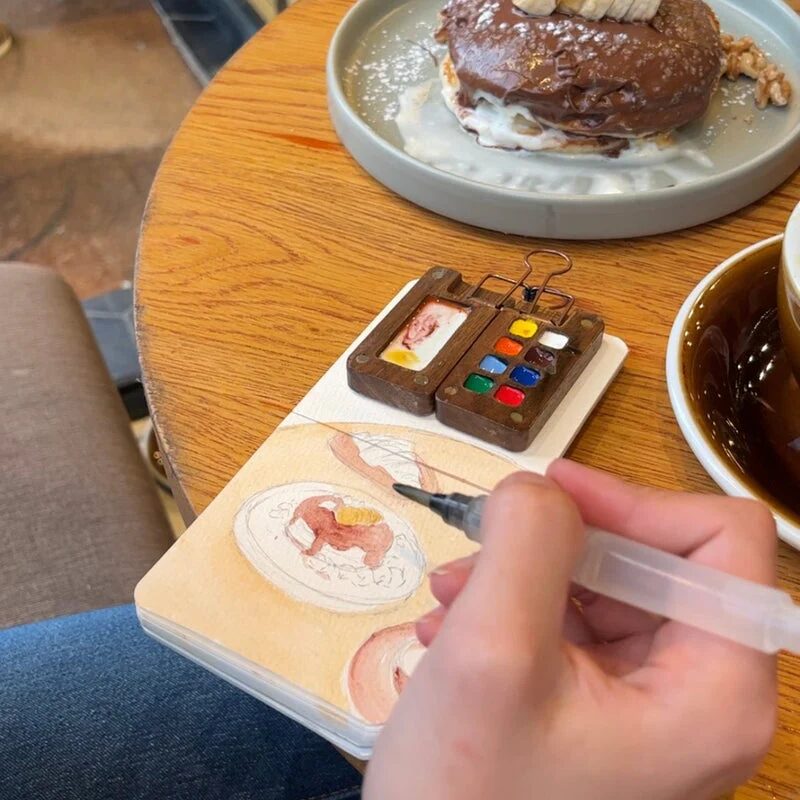
Supply wise, resist the urge to buy the giant art cart of your dreams. A pan set of watercolors, a couple of round brushes, and real watercolor paper will carry you through a full year. The paper is the one place not to cheap out, because printer paper turns into soggy ruffles and convinces kids they are bad at painting. Everything fits in one shoe box, which for homeschool supplies might be a record. If you want structure, one kit plus one tutorial a week is plenty of art curriculum. Do not let anyone sell you more than that for the elementary years.
What Art Time Did for the Rest of Our Week
What surprised me most is what painting does for everything else. My reluctant talker chats freely with a brush in his hand, and I have learned more about what is going on in his head during art time than during any sit down conversation. My wiggly one settles. And I get thirty minutes where nobody is asking me to check their work, because there is no wrong answer to check.
Keep it low stakes. No grades, obviously. We date each painting and keep them in a folder per kid, which becomes a lovely record of the year, and their progress shows up on its own without anyone forcing it. Some paintings are objectively terrible. They go in the folder too. That is kind of the point.
If art has been sliding off your homeschool schedule the way it slid off mine, do not overhaul anything. Pick one afternoon this week, put out water and paint, and sit down with your kids. Twenty minutes. That is the whole method. It might just become the part of your week that everyone protects.