
IF you were to make a general survey where you asked people whether they associate the word ‘chores’ with fun or not, you’d most likely get an overwhelming ‘NO!’.
And this is probably because of the fact that they’re just not fun. They’re interruptions. They’re the boring stuff we have to do, and only after it’s done can we get to the fun part of our day, whatever that may be.
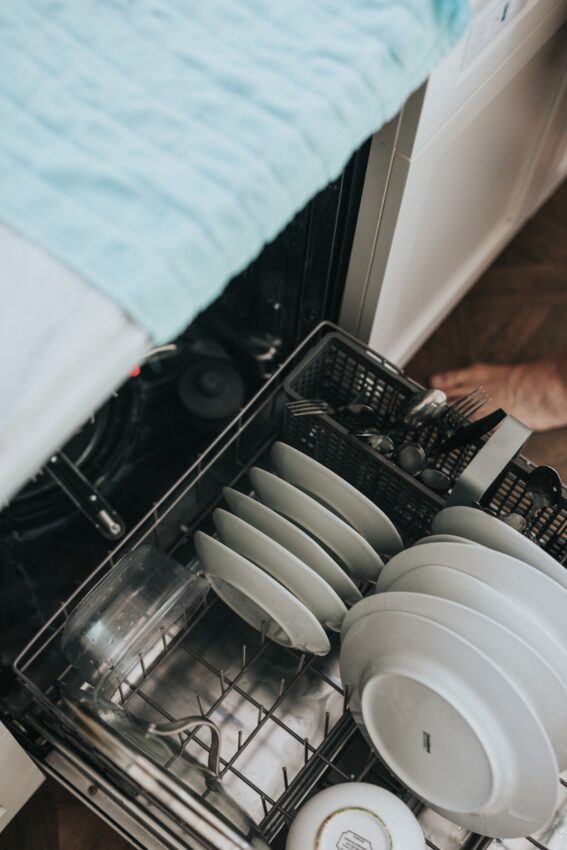
What would happen if we could look at chores as something other than obligations? What if they could be opportunities?
Well, that WOULD be more interesting, wouldn’t it? And this has to do with how all these chores are actually packed with lessons.
And in this article, I’ll show you exactly how chores can teach you things.
A lot of things. Even science and math.
The School Subjects You Already Have in Your House
The chalkboard has its place, and so do textbooks.
In fact, what inspired me to write this article is a friend I had in Nashville, whose wife was going through the Tennessee HVACR contractor exam prep to prepare for the licensing exam so she could pass it more easily on the first try. Their son was crazy curious about what his mom was doing, so she showed him a few things around the house.
She’d let him place his hand over the vents to feel the air, use the refrigerator as a cooling example, etc.
So I figured, there have to be more learning opportunities around the house, right?
And what do you know, there are!
Kitchen Science
Kitchen? Science? What?
Well, yes. Hear me out.
If you think about it and look outside the traditional box, your kitchen is basically a little science lab. You can produce all kinds of experiments (snacks) as basically a side hustle. And every time you’re cooking, you’re basically doing experiments. Right?
Think about it – every time you’re using your little precise scale to measure things, you’re doing fractions. If you double the ingredients to get twice the amount of muffins, you’re doing multiplication. Heating the pan involves thermal dynamics and chemistry. Eggs turn from semi-liquid to solid, and butter does the opposite. Pure physics.
Sure, this might all sound a bit silly at first, but try it out next time you’re in the kitchen. It’ll really open up some new horizons.
None of this feels like a lesson, but you can bet that the experience will stick around with your kid, and they’ll learn something from it.
Laundry Teaches More Than Clean Clothes
Laundry actually involves a lot more brainwork than you think. Sorting lights and darks is categorization, and reading tags is practical literacy. You can talk about why jeans need cold water and towels need hot water, and voilá! You’ve touched on basic chemistry.
Aside from all that, laundry also hones one indispensable skill and character trait – patience. And that’s invaluable.
The Backyard Science Lab
Being outside is healthy. It can also be very educational.
So, if you have a backyard, go and get your kid to dig in the dirt. This way, if they dig deep enough, they’ll learn about layers (not everything is just dirt). You can show them where all the water puddles form and how they disappear (drainage).
If you go and do a bit of gardening/planting, that’s basic biology.
On top of this, if they use shovels and rakes (tools in general), they’ll build spatial awareness and safety habits.
Grocery Shopping as Real-Life Math Practice
Look no further than the grocery store for some math lessons. Comparing prices per ounce to find the better deal uses analytical thinking and division. Keeping a running total in your head strengthens mental math. Those ‘30% off’ labels? That’s a great way to practice percentages.
But the most valuable lesson your kid will learn here is the budget. They learn that resources are limited and every choice has a cost.
How to Make Chores Feel More Like Growth and Less Like Work
Chores teach life skills. You know it, I know it, even your kid knows it. But that doesn’t mean any of us like them, and it certainly doesn’t mean you’ll get a child to enjoy them or even tolerate them.
So what can you do to change this?
A good way to start is to explain the reason behind every task. Don’t say ‘Clean your room,’ say ‘Let’s put the toys away so nobody trips on them in the middle of the night.’ That’s such a small change, but it makes the chore have a purpose, so it’s not random anymore.
Before you start with the chores, you can ask some predictive questions.
What I mean by that is, ask ‘Should the water be hot or cold?’ before you load the dishwasher. Or ask something like “How many bags will we fill?” when you’re standing in the yard.
This is a great way to help your kids think ahead. There are no wrong answers here. It’s all about the learning experience.
And don’t try to interfere in absolutely everything. Let them make their mistakes. This is how they learn. Just make sure they’re safe. That’s it.
One day, all these chores will fade out of memory. But they’ll come out feeling MUCH more confident and more capable.
Conclusion
The thing I love so much about this approach is the fact that practical experience sticks.
When you live through a problem and you solve it, you remember it. And if you’ve fixed your own mistakes a couple of times, you start trusting yourself.
And that trust is everything. It brings that hard-earned and long-lasting confidence you only get by doing.