
It’s 2 p.m., the kitchen still needs cleaning, and someone is asking what you’re making for dinner. You’ve already helped with schoolwork, answered messages, and dealt with three things that weren’t on today’s list. Now you have a few minutes before the next round of family activities, but you spend them trying to decide what needs doing first.
By evening, you’re worn out. You haven’t had a particularly terrible day, just one that never seemed to stop. You tell yourself you’ll relax after the kids are in bed, but there are lunches to pack, clothes to find, and tomorrow’s schedule to figure out.
A stress recovery routine has to work with days like these. It can’t depend on having an empty house or an uninterrupted hour. The better approach is to find a few predictable stopping points, use them for the kind of break you actually need, and change the household habits that keep taking that time away.
Stop Waiting for Everything to Be Finished
Most family to-do lists don’t have a real ending. There’s always another load of laundry, another message to answer, or something that could be organized before tomorrow. If you wait until every job is finished before resting, the break keeps moving further away.
Try giving routine chores a stopping point instead. After lunch, for example, clear the food and wash what you’ll need for dinner. The remaining dishes can wait. If the kids are old enough, give them a job they can handle without you standing beside them the entire time.
This works better when you decide what counts as finished before starting. “Clean the kitchen” can turn into wiping cabinets and reorganizing drawers. “Clear the counter and load the dishwasher” gives you an actual place to stop.
For families who homeschool, the same idea can help between lessons. Rather than using every independent-work period to catch up on chores, leave one short gap in the day without another job waiting for you. You can still be available if a child needs help, but you don’t have to turn that availability into constant activity.

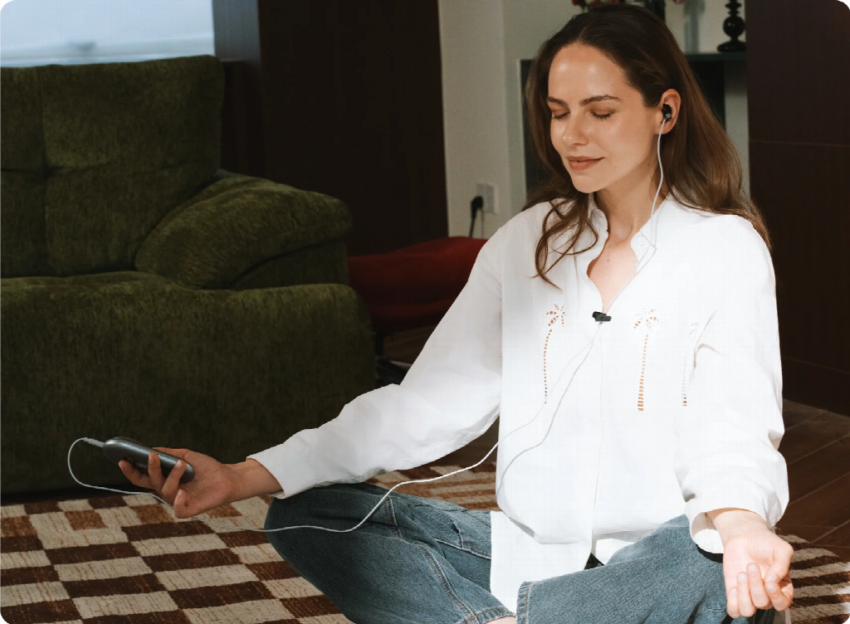
Choose something simple enough that you won’t spend the whole break preparing for it. Some parents prefer a book, a short walk, or a few minutes of comfortable breathing. Others explore everyday stress management tools, including ear-worn wellness devices from ZenoWell, when they have time for a longer, uninterrupted relaxation session.
Whatever you choose, the break should have a clear beginning and ending. If you have five minutes, don’t spend four of them searching for the perfect way to relax.
Build Your Routine Around Three Parts of the Day
Instead of trying to follow the same relaxation schedule every day, look at when family life naturally changes pace. Breakfast ends. The kids begin an independent activity. Everyone comes home from errands. Dinner finishes.
These transitions are easier to remember than a new appointment labeled “self-care” in an already crowded calendar.
Here’s one way to arrange them:
| Part of the day | Time to set aside | What to do |
| After the morning rush | 2–3 minutes | Sit down, get water, and decide on the next necessary task |
| After lunch or schoolwork | 5–10 minutes | Walk, stretch, read, or spend time without another screen |
| Before the evening chores | 5 minutes | Write down tomorrow’s essentials and divide remaining responsibilities |
| After the household settles | 15–20 minutes when available | Enjoy a longer quiet activity without adding more chores |
You don’t need to complete every row. Start with the transition you can protect most often. If lunch is unpredictable but the children usually read independently in the afternoon, use that period.
A short break during the day also serves a different purpose from going to bed early. It gives you a chance to stop responding to requests for a little while. Sleep remains necessary, but it doesn’t replace every opportunity to step away from a demanding activity.
For the routine to work, other family members need to know what is happening. You might tell an older child, “I’m sitting here for ten minutes. You can interrupt if you need help, but save questions about snacks and tomorrow’s plans until afterward.”
That boundary won’t work with every age or situation. A toddler still needs supervision, and some children need frequent support. In those cases, build the break around shared caregiving or a safe, supervised activity rather than expecting young children to manage on their own.
Have a Different Plan for Two Minutes and Twenty Minutes
One reason recovery routines fail is that people treat every break as though it should accomplish the same thing.
If you only have two minutes while dinner is cooking, that’s not enough time for a long guided relaxation session. It is enough time to put your phone down, release some tension in your shoulders, and stop planning three other tasks.
A ten-minute break gives you more options. You can walk around the block, sit outside with a drink, or read without checking household messages. If you’ve spent the morning helping children work through lessons, choose something that doesn’t require another round of concentration.
With twenty uninterrupted minutes, you may prefer a longer walk, a quiet hobby, or a structured relaxation session. The longer break works best when you don’t have to spend half of it finding equipment or deciding what to do.
The National Center for Complementary and Integrative Health describes several relaxation techniques, including breathing exercises, guided imagery, and progressive muscle relaxation (NCCIH, n.d.). Research suggests that some of these practices may help with stress, although results vary across techniques and study populations.
For progressive muscle relaxation, you can sit comfortably and gently tense a muscle group for a few seconds, then release it. Start with your hands or shoulders and notice the difference between holding tension and letting go. Skip any movement that causes discomfort.
If you prefer breathing exercises, keep them comfortable. Slow your breathing naturally for a few minutes without forcing deep breaths or holding your breath. Stop if you feel lightheaded or uncomfortable.
You don’t need to add all these activities to your day. Pick one option for short breaks and one for longer periods, so you aren’t making a new decision every time.
What to Do When Your Break Gets Interrupted
This is the part many wellness routines leave out.
You finally sit down with a book, and someone spills a drink. You get outside for a walk, and your phone rings about a school issue. You start a quiet activity, and a child needs your help.
A routine that only works without interruptions isn’t much use during a busy family week.
First, separate interruptions that need you immediately from things that can wait a few minutes. A child who is hurt needs attention. A question about what you’re having for dessert usually doesn’t.
For non-urgent interruptions, give a specific answer: “I’ll help you with that when the timer goes off.” It helps if children already know where to find ordinary supplies and what they’re allowed to handle themselves.
When an interruption does require you, deal with it and return to your break if there’s still time. You don’t need to begin an entire meditation session again or add an extra twenty minutes later to make up for what you missed.
It can also help to keep an easier backup activity. If you planned to walk but can’t leave the house, sit outside the back door for a few minutes. If the room isn’t quiet enough to read, stretch while the kids finish playing.
The point is to keep recovery from becoming another task that fails whenever the schedule changes.
Don’t Spend Every Break Catching Up on Household Work
A busy parent can find ten minutes of free time and immediately see five ways to use it. Fold the laundry. Empty the dishwasher. Answer the school email. Check the grocery list. Find the missing library book.
Sometimes one of those jobs really does need doing. But if every break becomes another opportunity to catch up, you never get much time away from responsibilities.
Take a closer look at the jobs that repeatedly interrupt your day. Some are quick chores; others require you to keep remembering, checking, and reminding everyone.
For example, asking another adult to pack lunch removes one task. Having that person take responsibility for the entire lunch routine, including checking supplies and remembering what needs replacing, removes some of the planning as well.
The same approach can work with children’s responsibilities. An older child may be able to check their school bag against a short list before bedtime. That won’t eliminate your role, but it can reduce the number of last-minute reminders you have to hold in your head.
Another useful change is to keep recurring information in one place. Put appointment reminders, school deadlines, and the weekly shopping list somewhere everyone responsible can see them. Avoid building a system so complicated that maintaining it becomes a new job.
These adjustments create opportunities for rest that no breathing exercise or wearable can create on its own.
Are Stress Wearables Worth Adding to a Family Routine?
Once you have a break you can reasonably protect, you may want something to help structure it.
A guided breathing app can be useful if you like following instructions. A smartwatch may help you notice activity or sleep patterns. Biofeedback devices show selected physiological signals while you practice relaxation, although changes in those signals don’t always mean you’ll feel better afterward.
Ear-worn vagus nerve stimulation devices work differently. They deliver electrical pulses through the skin at selected parts of the outer ear associated with the auricular branch of the vagus nerve. Researchers call this approach transcutaneous auricular vagus nerve stimulation, or taVNS.
Research has examined taVNS in clinical and experimental settings, including studies involving stress-related outcomes. However, results depend on the device, electrical settings, study population, and outcomes measured. A trial involving one stimulation protocol cannot establish that every consumer wearable reduces everyday stress.

Before spending money, it’s worth understanding what research says about vagus nerve stimulation and stress, especially the difference between physiological measurements, self-reported stress, and evidence involving a specific product.
For everyday family use, three practical questions may matter even more than a long feature list.
Will you have time to use it properly? A device with a twenty-minute session isn’t a good match for a two-minute break between household tasks. Follow the manufacturer’s session instructions instead of shortening or increasing use on your own.
Can you use it without supervising the device constantly? Consider whether you need an app, regular electrode adjustments, charging, or additional supplies. Even simple technology can become inconvenient when you’re frequently interrupted.
Are the instructions and precautions clear? Electrical stimulation devices need appropriate skin contact, comfortable intensity, and product-specific safety guidance. ZenoWell’s training materials, for example, describe timed sessions, checking ear contact, and removing the device afterward. Overnight wear is not recommended.
People with implanted electronic medical devices, certain cardiac or neurological conditions, or other relevant concerns should follow product restrictions and seek professional medical advice before considering electrical stimulation. Consumer devices should not be treated as therapies for anxiety disorders or other medical conditions without appropriate evidence and authorization.
You also don’t need to buy a wearable simply because it’s available. If ten minutes with a book consistently fits your afternoon better than setting up a device, there’s no reason to complicate it.
Try the Routine for One Week Before Adding Anything Else
A week is enough to see whether a routine fits your schedule, though it isn’t enough to prove that a technique or device produces a health benefit.
Pick one short break and one longer opportunity you can realistically protect. Don’t change your entire family schedule at once.
For example, you might try:
- Monday and Tuesday: Take five minutes after lunch without checking your phone. Notice what usually interrupts you.
- Wednesday and Thursday: Keep that break, but prepare the next activity beforehand so you don’t spend the time organizing.
- Friday: Ask someone else to take full responsibility for one recurring household job.
- Weekend: Look at which break was easiest to keep and whether anything needs to change for next week.
There is no need to record a stress score after every pause. A few practical observations are more useful: Did the break happen? Did you spend it doing another chore? What kept interrupting it? Would a different time be easier?
If your five-minute break never happens because everyone needs you after lunch, move it. If your twenty-minute evening routine regularly cuts into sleep, shorten it or place it earlier.
When a particular part of the day remains overwhelming, consider whether it needs fewer demands rather than a better relaxation technique. Sometimes the missing piece is another adult taking over a responsibility or a family schedule with less packed into it.
When More Than a Routine Is Needed
Short breaks can make a demanding day more manageable, but they can’t resolve every source of stress.
If you’re managing nearly all the childcare, household planning, and nighttime responsibilities, the workload itself may need to change. Resting for five minutes doesn’t replace practical support or shared responsibility.
Persistent exhaustion, severe anxiety, ongoing sleep problems, or stress that interferes with daily functioning also deserves professional attention. Relaxation practices and consumer wellness tools shouldn’t delay appropriate assessment or care.
For now, begin with one predictable part of the day. Decide what can wait, choose a break that fits the time you have, and make it easier to start again tomorrow. A family recovery routine is more useful when it survives a missed nap, a late dinner, or an unexpected school message.
References
- National Center for Complementary and Integrative Health. (n.d.). Relaxation techniques: What you need to know. National Institutes of Health.
- Federal Trade Commission. (2022). Health products compliance guidance.
- Sonnentag, S., & Fritz, C. (2007). The Recovery Experience Questionnaire: Development and validation of a measure for assessing recuperation and unwinding from work. Journal of Occupational Health Psychology, 12(3), 204–221.