
Today, screens are a normal part of many children’s lives. Kids use them for school, entertainment, games, videos, and staying connected with the world around them. Not all screen time serves the same purpose, and many parents are looking for ways to make some of that time more meaningful.
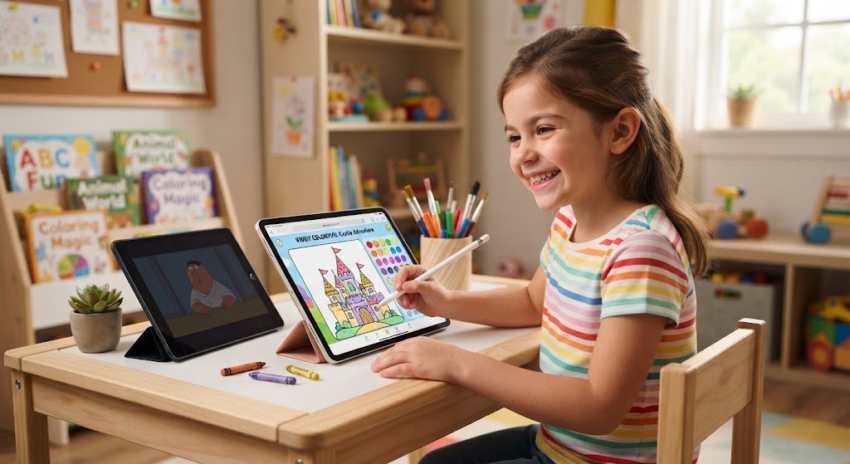
This is where online coloring can be a simple and enjoyable option. Children can use a digital coloring activity to make choices, experiment with colors, and create something of their own. For parents looking for an accessible way to combine technology, art, and learning, free online coloring pages can provide a creative option for a few minutes of screen time.
Why Creative Screen Time Matters
Eliminating screen time altogether is not necessarily the goal for every family. A more practical approach can be to consider how children are spending their time on screens.
Passive screen time often involves mainly watching or consuming content. Creative screen time is more interactive. It can give children opportunities to make decisions, experiment with ideas, and take an active role in what they are doing.
Take online coloring, for example. A child might decide that a dinosaur should be green, purple, or a completely different color. They might also experiment with different combinations to see what they like. These are simple choices, but they give children room to make decisions and express their preferences.
Creative digital activities can also be useful when parents want a quick activity without gathering paints, paper, brushes, and other supplies.
Online Coloring Encourages Creativity
Coloring may seem like a simple activity, but it leaves plenty of room for personal expression.
There is no single correct way to color a picture. A child can use realistic colors, give an animal a rainbow of colors, or create an imaginary world with unexpected combinations. This freedom gives children an opportunity to experiment without worrying about finding the “right” answer.
Younger children can practice making simple color choices, while older children may enjoy experimenting with combinations, patterns, shading, or visual storytelling.
Parents can encourage this process by asking open-ended questions such as:
- Why did you choose those colors?
- What do you see in this picture?
- What other colors could you try?
- Can you create a story about your picture?
Questions like these can turn a simple coloring activity into a conversation about ideas, colors, and imagination.
A Simple Way to Combine Art and Learning
Coloring does not have to be separate from learning. It can easily be connected to topics children are already exploring. Parents can also take the activity off-screen with free printable coloring pages.
For example, a child coloring an animal could talk about its name, habitat, or basic characteristics. A space-themed coloring page could lead to a conversation about planets and stars. Pictures of flowers, trees, or insects can provide a simple starting point for talking about nature.
Color recognition can also be included naturally. Children can name primary colors, look for warm or cool colors, or create a picture using different shades from the same color family.
These conversations can provide opportunities to practice vocabulary, particularly for preschool and early elementary-age children. As they color, children have a natural reason to talk about objects, colors, shapes, animals, and settings.
Coloring Can Support Fine Motor Skills
Traditional coloring gives children opportunities to practice controlling crayons, pencils, and markers as they work around shapes and areas of a picture.
Digital coloring involves a different type of interaction. Children may select colors and fill areas using a mouse, trackpad, or touchscreen. Depending on the child’s age and the device being used, this can provide opportunities to practice basic digital control and hand-eye coordination.
Digital coloring does not need to replace drawing or coloring with traditional art materials. The two can work well together.
One day, a child might color a picture online, and the next day, they might print a similar activity and use crayons or colored pencils. Moving between digital and physical art gives children different ways to experiment and create.
From Screen to Paper: Creating a Balanced Art Routine
One simple way to include online coloring in a broader creative routine is to combine it with offline activities.
For example, a routine could look like this:
- Choose: Let your child select an online coloring page.
- Create: Give them time to experiment with colors digitally.
- Talk: Ask about their color choices or what they imagine is happening in the picture.
- Continue: Offer crayons, colored pencils, or markers for an offline coloring activity.
- Create something new: Encourage your child to draw their own picture based on the same theme.
This approach makes the screen a starting point rather than the entire activity.
Let Kids Lead the Creative Process
Parents can sometimes feel pressure to make every activity educational, but creativity also needs room for simple enjoyment.
If a child wants to color the sky orange or make an elephant purple, there is no need to correct the choice. Imaginative coloring can give children an opportunity to express their ideas without worrying about whether the final picture looks realistic.
Instead of focusing on whether the picture looks “good,” parents can focus on the process. What did the child notice? Why did they choose those colors? Did they add anything of their own?
This can help make art feel more like exploration than a task that has to be completed perfectly.
Making Screen Time More Intentional
Online coloring is not a replacement for outdoor play, reading, physical activity, social interaction, or hands-on creative activities. It is simply another option for families who want some screen time to involve active participation.
One practical benefit is its simplicity. There is little preparation involved, and children can often get started quickly. The activity can also be adapted to different ages and interests. CPForKids, for example, offers free online coloring without requiring sign-up, with a range of coloring themes and browser-based activities that children can use directly.
For families looking to make everyday screen use more intentional, creative digital activities can provide a practical middle ground.
Turning a Few Minutes Into a Creative Opportunity
Children do not always need elaborate crafts or expensive art supplies to explore their creativity. Sometimes, a simple coloring page is enough to get an idea started.
Online coloring can give kids opportunities to make choices, experiment with colors, and explore ideas in a digital environment. When combined with printable pages, drawing, storytelling, and hands-on art, it can become one part of a broader creative routine.
The next time your child asks for screen time, consider giving them an opportunity to create rather than simply consume. A coloring page may be a small activity, but it can also be a starting point for art, conversation, learning, and imaginative play.