
When babies transition into toddlerhood, their relationship with sleep changes dramatically. They are no longer infants who sleep passively wherever they are placed. Instead, they are active learners with rapidly developing motor skills, intense curiosity, and a growing desire for autonomy.
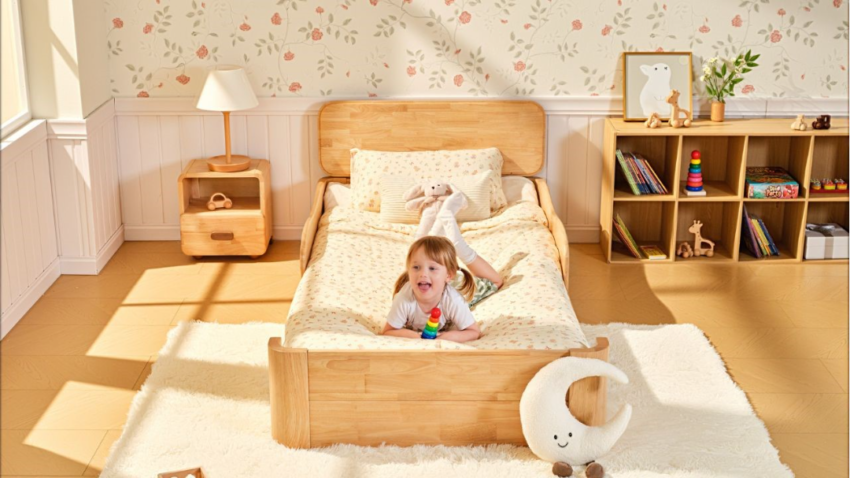
For children aged 1 to 6, sleep environment plays a critical role in their psychological and physical development. Choosing the right sleeping arrangement—including a well-designed wooden toddler bed—can support this important stage by encouraging independence. Yet, traditional sleeping setups—like high-walled cribs or elevated standard beds—often inadvertently disrupt their sleep architecture, leading to bedtime resistance and frequent nighttime awakenings.
What Affects a Toddler’s Sleep?
Unlike infants, toddlers and young children face unique developmental milestones that directly collide with their sleeping environments:
The Surge of Gross Motor Skills: Toddlers have an innate biological drive to move, roll, stretch, and practice coordination. If their sleep space is physically restrictive, they often bump into rigid barriers, causing them to wake up fully during light sleep cycles.
The Dawn of Autonomy and “Bedtime Battles”: Between ages 1 and 3, children realize they are separate individuals from their parents. When they are physically lifted and “trapped” inside a crib, it triggers a control struggle, turning bedtime into a source of anxiety and resistance.
The Abrupt Wake-Up Shock: A child’s sleep cycle includes brief natural awakenings. When a toddler wakes up in a confined space and cannot access their room or toys independently, their immediate survival instinct is to signal an adult by crying or screaming, creating a stressful morning for the entire household.
Why Choose a Montessori Floor Bed?
The Montessori philosophy centers on creating a “Prepared Environment”—a space tailored to the child’s size, needs, and developmental stage. Choosing a best montessori floor bed directly addresses the root causes of toddler sleep disruptions by replacing confinement with “Freedom Within Limits.”
- Falling Asleep More Naturally
Instead of being forced into a stationary position, a low floor bed allows a child to wind down gently. They can move around, stretch, or look at a book on their own terms. By removing the “cage” effect, bedtime feels less like a restriction of freedom and more like a natural, comforting invitation to rest.
- Encouraging Self-Soothing and Calm Awakening
Toddlers experience short sleep cycles. When they wake up briefly at 3 AM on a floor bed, the room remains a stable, open reference point. They can sit up, look around, and realize they are safe. Instead of panic-crying for entry/exit access, they can independently rearrange their pillow or play quietly until they drift back to sleep.
- Transforming Mornings Through Independence
As children grow, their self-sufficiency thrives when they can get in and out of bed without waiting for an adult. A floor bed allows them to wake up, slide out safely, and engage with childproofed room activities independently, bridging the gap between rest and alertness peacefully.
The Evolution: Bridging Philosophy with Long-Term Reality
While the developmental benefits of a floor bed are undeniable, many parents hesitate because traditional fixed floor setups have a short shelf life—becoming obsolete as the child grows taller.
This is where advanced adaptable engineering, such as the Flexispot Lumi Evo Kids Bed, solves the practical dilemma. It functions perfectly across different childhood stages through a clever convertible structure:
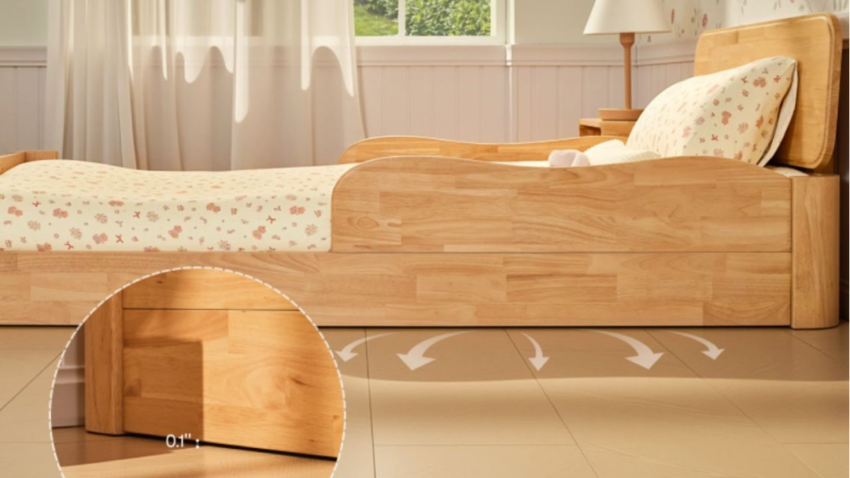
The Low-Profile Montessori Phase (Toddlerhood): Positioned directly near the ground, this mode gives young children the ultimate freedom of movement. Backed by protective bedside panels, it completely eliminates falling risks while cultivating early independence.
The Elevated Twin Bed Phase (Older Childhood): As your child matures into school age, the same frame transitions into a standard elevated twin bed. This expands the horizontal turning space and accommodates a longer body length while keeping the reassuring, familiar comfort of their original bed.
Safety and Structural Foundations for Active Sleepers
A Montessori setup only works if the physical structure can handle the daily energy of a growing child. Safety in a floor bed shifts away from trapping the child behind bars to managing stability and environment:
Solid Wood Stability: Toddlers don’t just sleep; they sit, turn, and play. The solid wood structure of the Lumi Evo Kids Bed ensures the frame remains heavy-duty and steady, eliminating squeaks or shifting that might startle a light sleeper.
Vital Airflow and Spine Support: Placing a mattress directly on a cold floor restricts ventilation, trapping moisture and heat. The Lumi Evo incorporates 15 reinforced solid wood slats to distribute weight evenly, support growing spines, and maintain consistent under-mattress airflow for a crisp, healthy sleep climate.
Distance Reduction Security: Security is achieved through smart, low-profile placement. With rounded corners and a low frame, the physical risk of falling from height is eliminated, changing parental supervision from containment to designing a secure room layout.
Conclusion
A Montessori floor bed is far more than a design trend; it is a developmental tool that respects a growing child’s physical and psychological evolution. By aligning the sleep space with a toddler’s natural urge for mobility and independence, it transforms nighttime restlessness into confident, autonomous sleep habits.
With innovative systems like the Flexispot Lumi Evo Kids Bed, families can seamlessly adopt this enriching Montessori phase without sacrificing long-term utility. Its convertible, evolutionary design ensures that a single premium bed adapts from early toddler milestones into later childhood—fostering a lifetime of independent sleep without overcomplicating your home.