
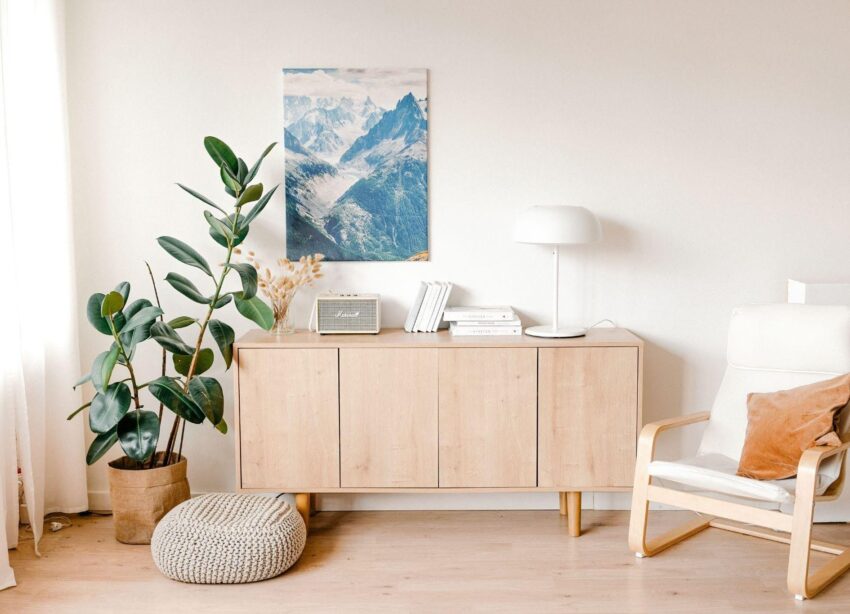
A sophisticated living room doesn’t need to be empty, but it does need visual breathing space. Even when books, electronics, and accessories are neatly arranged, a room can still feel busy if everything remains visible.
That is why good storage involves more than putting belongings in designated places. Some items benefit from being displayed, while others are better kept completely out of sight. The difference between organization and actual concealment becomes especially important around a television, where devices, controllers, cords, and everyday objects can quickly dominate the room.
A calm, clutter-free space starts with deciding what deserves to be seen. From there, furniture can be evaluated according to how effectively it hides, organizes, displays, and connects the things that belong in the living room.
Know the Difference Between Hidden and Just Tidy
Storage can organize clutter without actually concealing it. Opaque doors fully block contents from view, glass doors keep objects contained but visible, and open shelves organize items without providing any visual barrier.
The Martha Stewart Living Room Collection is a modular storage system from Flash Furniture, available in the Bedford and Lily Pond lines, that combines cabinets, hutches, and TV stands into a custom built-in look with solid wood frames, soft-close doors, and adjustable shelving. That provides modular storage that looks like custom built-ins with no renovation, no contractor, no DIY project.
The two fluted wood cabinets in the Bedford 6-Piece Modular Media Center are the only genuinely concealed storage in the configuration, using opaque fluted-wood doors with soft-close hinges.
These cabinets can keep cable boxes, streaming devices, and gaming consoles behind closed doors when enclosed storage is appropriate. Two glass-door cabinets provide tidy, enclosed storage but leave their contents visible. Two open hutches are intended for display rather than concealment.
The White and Gold version pairs White, one of the collection’s six curated finishes, with gold hardware.
Choose Storage That Keeps Visual Clutter Out of Sight
Once hidden storage has been separated from tidy storage, each section can be used more deliberately. Electronics, controllers, accessories, and other visually distracting objects are logical candidates for opaque cabinetry when enclosed storage suits the item.
In the Bedford 6-Piece Modular Media Center, the two fluted cabinets provide closed cabinet storage rather than open shelving. A cable box, smaller electronics, controllers, and accessories can therefore be placed behind opaque doors rather than remaining visible around the television. Soft-close doors and adjustable shelving make the enclosed space easier to organize.
Glass-front cabinets and open hutches are better suited to items that can remain visible. As with other small home upgrades, the goal is to give everyday items a practical place to go. Books, decorative objects, and neatly folded throws can stay visible while genuinely concealed storage is reserved for items that would otherwise contribute to visual clutter.
Look for Furniture-Style Details, Not a Media Setup
A TV wall can provide substantial storage without making technology the room’s defining feature. The difference often comes from details associated with living room furniture, including coordinated cabinetry, finished door fronts, consistent hardware, and a considered mix of display and closed storage.
The Bedford 6-Piece Modular Media Center uses solid wood frames, bases, and legs alongside fluted doors, glass-front cabinetry, and open display areas. These details create storage that reads as living room furniture, not as a media rack.
That furniture-led appearance also makes modularity useful beyond storage capacity. The wider Bedford and Lily Pond system supports 2-piece through 6-piece configurations, allowing the amount of furniture to change while retaining a coordinated visual language. Instead of treating the television area as a collection of equipment stands, the wall can remain connected to the wider decor.
It Should Give the Cords Somewhere to Actually Go
Tidiness also depends on what happens behind the furniture. Even when electronics are organized, visible cables running toward outlets can make the TV area feel unfinished.
The open hutches in the Bedford 6-Piece configuration have rear cord management openings. These give cables a defined route through the back rather than requiring them to run around visible furniture edges.
This feature addresses tidiness rather than concealment. The openings don’t hide the contents of an open hutch, but they can help keep cable routes controlled and reduce visual distraction around the media area.
Outlet placement is therefore worth considering before furniture is positioned. Mapping where the TV, devices, and power connections will sit can help buyers determine whether the confirmed cord openings align with the equipment they intend to use. Cable-management features should always be evaluated according to the specific component on which they are provided.
Consider the Airflow Needs of Your Electronics
Not every electronic device belongs in enclosed furniture. How much heat a component produces during normal use matters when deciding whether opaque cabinetry is an appropriate place for it.
Devices that run cool, a streaming stick, a cable box, a router, a soundbar remote, sit fine behind closed cabinet doors. Game consoles under load and AV receivers generate real heat and need either a vented cabinet or an added fan; BDI’s Corridor line and AC Infinity’s cabinet fans are built for that case. For lower-heat components that are suitable for enclosed storage, the Bedford 6-Piece Modular Media Center provides soft-close cabinetry, while its open hutches include rear cord management openings for routing cables.
The BDI Corridor 8179, at around $4,399, provides the relevant specialist comparison because its design incorporates airflow and ventilation engineering for AV equipment. That is a genuine advantage for buyers whose electronics require dedicated ventilation.
Concealment should therefore follow the requirements of the device rather than the desire to make everything disappear.
Compare the Full Configuration, Not Just the Price
Price comparisons are more useful when the amount of furniture being compared is clearly defined. A coordinated wall assembled from multiple individual pieces can reach a very different total from a single cabinet or TV stand.
The Bedford 6-Piece Modular Media Center is around $2,890 for a configuration combining two fluted wood cabinets, two glass-door cabinets, and two open hutches. For another specific reference point, the Pottery Barn Aubrey 139-inch entertainment center is around $6,472.
The comparison isn’t simply about which option has the lower number. Buyers can consider how much of the wall each configuration furnishes, the types of storage provided, and which materials and functional details are included.
For the Bedford configuration, solid wood frames, bases, and legs and the combination of concealed, glass-fronted, and open storage provide concrete points to assess alongside the overall configuration cost.
Creating a Calm Room Starts With What Stays Visible
A sophisticated, clutter-free living room depends on knowing what should be genuinely hidden and what only needs to be organized. Opaque cabinetry can remove selected items from view, while glass-fronted and open storage keep books, decor, and other belongings orderly without making them disappear.
That balance creates more breathing space and helps the room feel considered rather than crowded. With six curated finishes available across the system, modular storage that looks like custom built-ins can support a calmer, more cohesive appearance with no renovation, no contractor, no DIY project required.
FAQ
What’s the Difference Between Storage That’s Tidy and Storage That Actually Hides Things?
Tidy storage keeps belongings organized, but it does not always remove them from view. Glass cabinets contain items while leaving them visible, and open shelving keeps objects arranged without concealing them.
True concealment requires an opaque barrier. When comparing furniture, buyers should check the door type rather than assuming every cabinet hides clutter.
Where Can I Buy This Kind of Media Storage?
The Bedford 6-Piece Modular Media Center belongs to the Martha Stewart Living Room Collection, manufactured by Flash Furniture, a Ubique Group company. The collection is available through retailers including Target, Home Depot, Lowe’s, Best Buy, and Walmart.
Availability can vary, so the specific configuration, finish, and dimensions can be checked with the retailer before ordering.
How Do I Keep a TV Wall From Feeling Like a Media Room?
A calmer TV wall balances technology with ordinary living room elements. Opaque cabinetry can remove selected visual clutter, while a limited number of books, framed pieces, or decorative objects can give visible shelves a more residential purpose.
Keeping cables controlled also reduces the visual emphasis on electronics. The aim isn’t necessarily to conceal every object, but to leave enough open visual space that the television and its equipment don’t dominate the room.
Does It Require Assembly?
For the Martha Stewart Living Room Collection, adult assembly is required, and pieces ship in multiple boxes. Modular storage shouldn’t be mistaken for furniture that arrives completely assembled.