
Thinking about pulling your child out of the classroom?
You are not alone. Thousands of families decide exactly what you are deciding each and every year. The reason most choose Home Education is the same reason you are here. Their child was falling behind and nobody at school could seem to remedy it.
Here’s the good news…
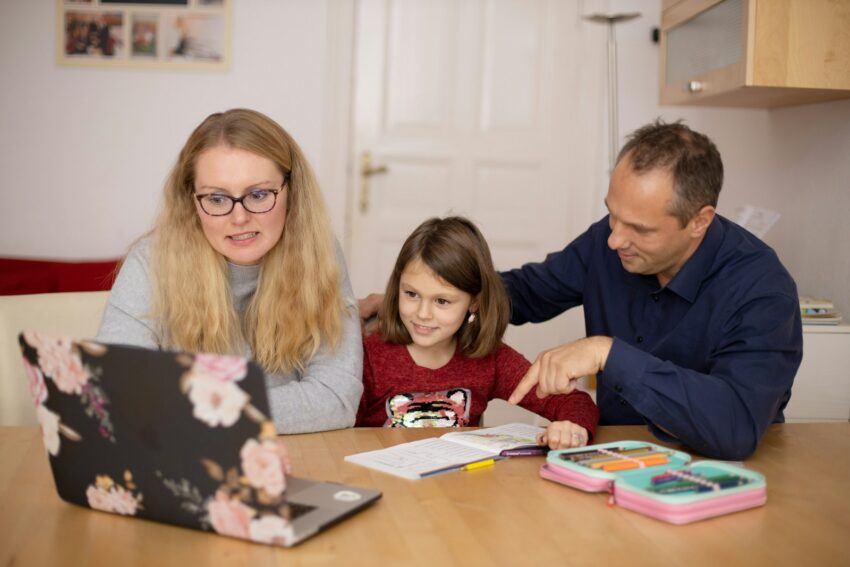
Home can be an amazing place for a differently wired child. No bells. No thirty other students. No waiting six months to have a meeting that gets you nowhere.
However there’s a caveat. Homeschooling your dyslexic, ADHD or autistic child requires a different approach.
Here’s how to build one…
Here’s what’s coming up:
- Why So Many Families Are Making The Switch
- The First Steps To Take
- Inclusive Education Practices That Work At Home
- Mistakes That Trip Up New Homeschool Parents
Why So Many Families Are Making The Switch
Learning differences are far more common than most parents realise.
According to NCES data, there are currently 7.5 million students in the United States who receive special education services, about 15% of all people in public school. Almost 1 out of 3 of those students are classified as having a specific learning disability.
That is a lot of kids. And schools are stretched thin.
Parents also relocate. Homeschooling increased by 4.9% in the 2024-2025 school year, nearly triple the growth seen before the pandemic. Even more revealing, roughly a quarter of homeschooled students are reported to have a disability.
Say that again. Families who homeschool differently-abled children are not fringe homeschoolers. They make up a massive portion of homeschoolers.
Why? Because:
A classroom needs to function for all students. One kitchen table only needs to work for one child at a time. That means you can apply lessons from inclusive education – the same practices educators study in online Special Education Masters programs – at home. No committee. No budget vote. No six week wait for approval. Differentiated instruction. Multi-sensory lessons. Flexible assessment… parents can start implementing it all on Monday morning. Schools can’t match that kind of agility.
Step 1: Work Out How Your Child Actually Learns
Before buying a single textbook, figure out how information gets into your child’s head.
Some children need to hear it. Some need to see it. Some need to build it with their hands. Some need to walk around the room while they think. Most “school problems” aren’t can’t problems. They are not like this problems.
A good starting point is writing down three short lists:
- Things the child does well (even if it has nothing to do with school)
- Things that reliably cause a meltdown
- The hours of the day when focus is at its best
This last list is way more important than most people realize. Your kid might not be able to read a page at 8am, but might breeze through three chapters at 11am. School can’t accommodate that. You can though.
If you have an IEP, a 504 plan, or an old eval report stuffed in a drawer somewhere, pull it out. It is full of helpful information, even if the school did nothing you wanted them to do. Someone already paid for that testing. Use what you’ve got.
Step 2: Check The Rules In Your State First
This section is boring. It also causes the majority of headaches later on.
Homeschool law is determined on a state by state basis, and they can vary greatly. Some states only require a letter of intent. Others require attendance records, portfolio review, or testing at specified grade levels.
Here’s another thing to look into. Many districts will allow a homeschooled child to receive speech therapy, occupational therapy or evaluations at the public school. Lots of parents don’t even ask because they think the answer will be no.
Ask anyway. The worst thing that happens is a no.
Step 3: Build A Routine That Bends
New homeschool parents love a colour-coded timetable.
Then week three arrives and the whole thing falls apart.
Why? Because strict schedules fall apart as soon as your kid wakes up on the wrong side of the bed, and kids with learning differences wake up on the wrong side of the bed. Playful routines flex. Punitive routines crack, and everyone feels like a failure.
Schedule your day in blocks, not by clock times. Example: Hard subject, brain break, easy subject, lunch, hands-on project. You keep the same order every day so there is a rhythm, but nothing is tied to a certain minute on the clock.
Less time beats more time as well. Twenty minutes of good studying will always beat ninety minutes of suffering.
Step 4: Put Inclusive Education Practices Into The Lessons
Inclusive ed practices are not difficult. Teachers take years of training to learn how to do them with thirty kids at once — a parent only needs to do it with one.
The ones that make the biggest difference at home are:
- Repeat the same concept multiple ways. Explain it, demonstrate it, then allow the child to demonstrate it.
- Break work up into smaller sections. Five problems, take a break. Not fifty problems and an argument.
- Allow the child to demonstrate however they are able. An oral response, a picture or even a video can display comprehension just like a typed or handwritten response can.
- Don’t feel guilty about assistive technology. Text-to-speech, audiobooks, speech-to-text and calculators eliminate barriers. They aren’t replacing learning.
- Teach to the strength, support the weakness. If a child loves building, let them learn fractions by building.
Document simply what did and didn’t work. Patterns will emerge after a month – and those patterns are worth more than any online curriculum review.
Don’t Try To Do The Whole Thing Alone
When you’re homeschooling there will be times you feel like an outsider. Homeschooling remains a choice that most people do not take. In the 2022-23 school year only 3.4% of K-12 students were homeschooled, so feeling alone at the beginning is understandable.
Please don’t. There are local co-ops, therapy providers, online tutors and small group classes in just about every area. Giving one subject over to someone else is not giving up. It’s being wise.
Mistakes That Trip Up New Homeschool Parents
The biggest one? Recreating school at home.
Rows of desks, a bell, learn six subjects per day. That system is exactly what was not working, so copying it makes little sense.
A few others worth avoiding:
- Comparing progress to grade level instead of last month
- Buying an expensive curriculum before understanding how the child learns
- Skipping breaks because the work “isn’t finished”
- Treating a bad week as proof the whole plan has failed
Learning curve for a child with learning differences is seldom linear. It plateaus. Flat. Flat. Flat. Then skyrocket. Quitting during the flat part is panicking.
Bringing It All Together
Homeschooling a child with differences requires effort. It’s also one of the only options where the instruction is molded around them, not vice versa.
To recap the plan:
- Learn how the child takes information in
- Check the state rules before anything else
- Build a routine that bends instead of snapping
- Use inclusive education practices in every lesson
- Get outside help early
- Measure progress against last month, not the grade level
Start small. One subject, one method, one week. Then adjust.
That is how nearly every successful homeschool family began.