
Between homeschool lessons, three kids underfoot, and trying to get dinner on the table before everyone’s patience runs out, my kitchen apron has always been more of an afterthought than a tool. For years I just grabbed whatever cotton one was hanging on the hook, usually stained, usually a little damp, and called it good enough. It was not until I actually looked into a reliable leather cooking apron that I realized how much easier daily cooking could be with the right gear.
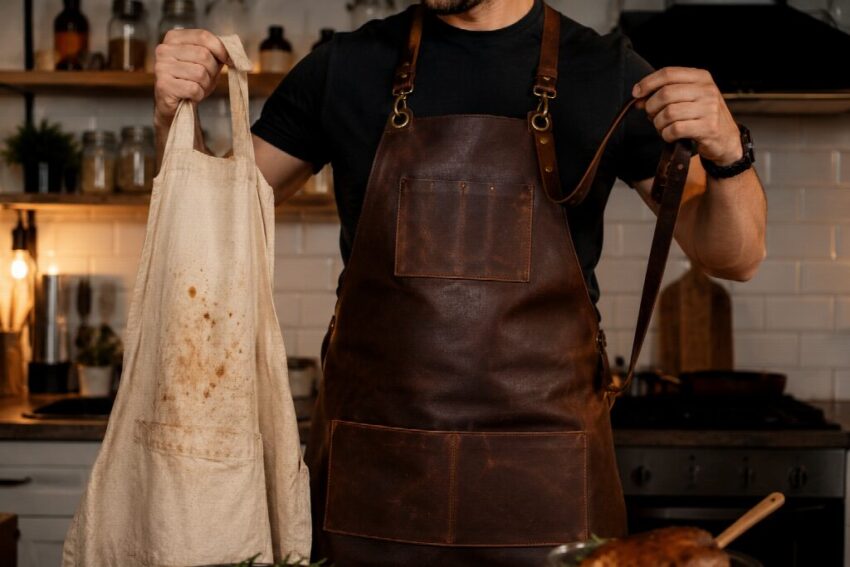
That change came after one particularly chaotic taco night where hot oil, a toddler “helping” stir, and a splash of salsa left my apron (and the shirt underneath it) ruined in about four minutes. I finally sat down and looked into whether there was a better option for a kitchen that gets used hard, every single day, by people who are still learning their way around a stove.
Why Cotton Aprons Struggle in a Real Family Kitchen
If your kitchen is anything like mine, it is not a calm, controlled environment. It’s kids reaching for hot pans, oil that splatters further than it should, and marinades that always seem to end up somewhere other than the bowl. A few things I ran into constantly with fabric aprons:
- Grease and sauce soak straight through to your clothes underneath
- Stains that never fully wash out, no matter the detergent
- Ties and straps that loosen every time an eight-year-old tugs on them
- No real pockets for the thermometer, timer, or recipe card you actually need on hand
None of that is a big deal once in a while. But when cooking is a daily, hands-on family activity, it adds up fast.
What Changed When I Switched to Leather
I ended up trying a full-grain leather apron after a friend who runs a small home bakery recommended one, and it has genuinely changed how relaxed I feel about letting my kids get involved in meal prep. Grease wipes right off instead of soaking in. Spills that would have ruined a cotton apron just bead up and wipe away. It has held up through months of daily use, including plenty of “helper” mishaps, without a single lasting mark.
A Few Things I’d Tell Any Homeschooling or Homemaking Family
If you’re thinking about making the switch, here’s what actually matters when you’re shopping:
- Look for full-grain or top-grain leather, not bonded leather, which peels and cracks quickly
- Cross-back straps distribute weight better than a single neck strap, especially if you’re standing at the counter for hours
- Deep pockets matter more than they sound like they would, especially with little hands constantly needing something handed to them
- Solid hardware (brass or stainless) holds up far better around heat and steam than cheaper fittings
Keeping It in Good Shape
The upkeep turned out to be far simpler than I expected. I wipe it down with a dry cloth after cooking while it’s still a little warm, and if something greasy sits on it, a bit of cornstarch left for twenty minutes or so lifts it right out. Every couple of months I rub in a small amount of beeswax conditioner and buff it off. I hang it flat rather than folding it, and it has never seen the inside of a washing machine.
Was It Worth It?
Honestly, yes. It’s a small change, but it’s made cooking with my kids feel less like damage control and more like something we actually enjoy doing together. If you’re weighing whether to make the switch yourself, I’d say a well madedurable leather apron is one of those small purchases that ends up mattering a lot more than you’d expect once it becomes part of your daily routine.
If your kitchen sees the kind of daily use ours does, a leather apron isn’t a splurge so much as a small piece of gear that quietly makes everything easier.