
Sammamish is one of the most beautiful places to live on the Eastside, but all those towering Douglas firs and western red cedars come with a tradeoff — heavy shade that turns front yards into dark, patchy wastelands of moss and bare dirt. If your front yard landscaping in Sammamish looks more like a forest floor than a welcoming entrance, you are not alone, and the good news is that shade is not the enemy most homeowners think it is.
Front yard landscaping in Sammamish requires a different playbook than what works in sunnier neighborhoods. The standard approach of planting roses, ornamental grasses, and flowering shrubs simply does not work under a dense canopy. But when you choose plants and design strategies built for shade, you get a front yard that actually looks better than the sun-drenched version — with richer textures, deeper greens, and a layered, woodland elegance that suits the PNW landscape perfectly.
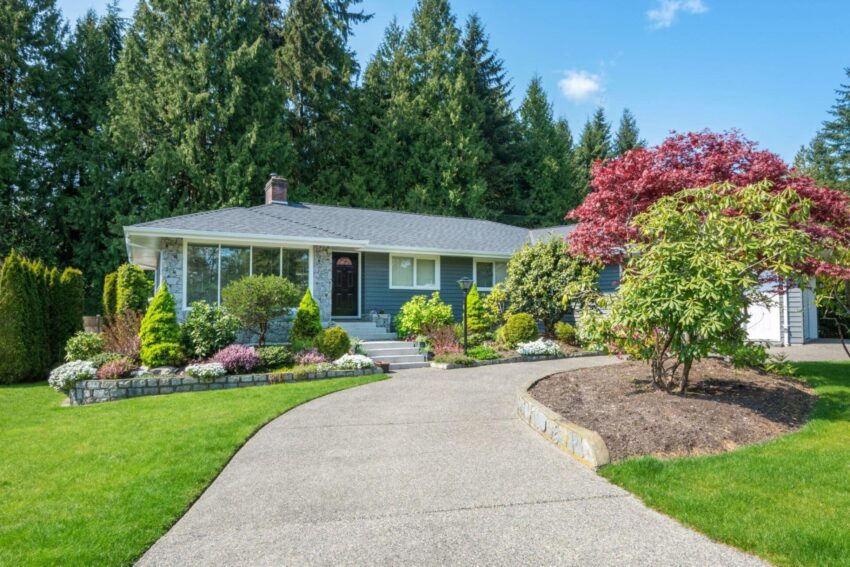
Understanding Shade in Sammamish
Not all shade is created equal, and understanding what kind you have is the first step toward front yard landscaping that actually works. Sammamish homes sit under varying degrees of tree cover, and each type demands a different approach.
Deep Shade vs. Dappled Shade
Deep shade means less than two hours of direct sunlight per day. This is common on north-facing lots or under dense stands of mature firs. Dappled shade means sunlight filters through the canopy in shifting patches throughout the day. Most Sammamish front yards fall somewhere between these two extremes.
Dappled shade is actually ideal for a huge range of plants. It provides enough light for growth while protecting foliage from the scorching afternoon sun that can damage delicate leaves in midsummer. Deep shade is trickier, but far from hopeless — it just narrows your plant palette and pushes the design toward texture and form over flowers.
Dry Shade: The Real Challenge
The toughest condition in Sammamish front yards is dry shade — areas under large trees where the canopy intercepts most rainfall and the tree roots compete aggressively for moisture. The soil in these spots is often thin, root-packed, and surprisingly dry even after days of PNW rain. This is where most generic landscaping plans fail because they assume shaded areas are also moist. In Sammamish, under a sixty-foot Douglas fir, that assumption is dead wrong.
Addressing dry shade requires soil improvement, careful plant selection, and sometimes supplemental irrigation during the establishment period. It is not as simple as buying a flat of hostas and hoping for the best.
Plants That Thrive in Sammamish Shade
The right plant choices make front yard landscaping in Sammamish not just possible but genuinely stunning. Here are the performers that earn their place in shaded front yards across the Plateau and the surrounding Eastside neighborhoods.
The Foundation Layer: Evergreen Structure
Every shaded front yard needs a backbone of evergreen plants that provide year-round structure. Without them, the yard looks decent from May to October and empty the rest of the year — which in the Greater Seattle area means looking bare during the majority of the time people actually see it.
Sarcococca, also called sweet box, is an underused gem for Sammamish shade gardens. It stays green and compact year-round, produces fragrant white flowers in late winter, and handles deep shade with zero complaints. Rhododendrons are a classic PNW choice and grow beautifully in Sammamish’s acidic soil under conifers. Dwarf varieties work well in smaller front yards where standard rhodies would take over.
Japanese pieris and aucuba bring variegated foliage that brightens dark corners without needing sunlight. These are the plants that catch the eye from the street and make a shaded yard look intentional rather than neglected.
The Middle Layer: Texture and Color
This is where shade gardens really shine compared to sunny ones. The foliage textures available in shade plants are extraordinary — lacy fern fronds, bold hosta leaves, delicate bleeding heart stems, and the architectural fans of Japanese maple. Layering these textures creates visual depth that a sunny perennial border simply cannot match.
Hostas are the obvious choice, and for good reason. They come in hundreds of varieties from miniatures to massive three-foot-wide specimens, in colors ranging from deep blue-green to chartreuse to white-edged. In Sammamish, hostas thrive because our cool summers and ample rain give them exactly what they want. Slugs are the main enemy — a band of copper tape around beds or an organic iron phosphate bait keeps them in check.
Heuchera brings color that most shade plants lack. Modern cultivars come in deep purple, coral, amber, and lime green. They stay evergreen through Sammamish winters and produce delicate flower spikes in spring that attract hummingbirds.
The Ground Layer: Living Carpet
Bare soil under trees is the number-one curb appeal killer in Sammamish front yards. Ground covers solve this by creating a continuous living carpet that suppresses weeds, holds soil, and gives the landscape a finished, polished look.
Sweet woodruff spreads quickly in shade and produces tiny white flowers in spring. It handles the dry shade under conifers better than most ground covers. Kinnikinnick, a PNW native, works in partial shade and provides evergreen coverage with red berries in fall. For the darkest spots, Irish or Scotch moss creates a velvety green surface that looks like it belongs in a fairy tale.
Design Strategies for Shaded Front Yards
Plants are only part of the equation. How you arrange them and what you pair them with determines whether your front yard reads as “landscaped” or “overgrown” from the street.
Create Contrast With Hardscape
In a shaded yard, hardscape elements are critical because they provide the crisp lines and clean edges that prevent a garden from looking wild. A natural stone pathway leading from the driveway to your front door gives the eye a clear focal point. Dry-stacked stone borders around planting beds define structure even in the dead of winter when some perennials are dormant.
The team at Angkorscape often recommends using lighter-colored stone in shaded front yards because it reflects ambient light and keeps the space from feeling cave-like. Buff-toned flagstone or light gray granite pavers create a visual brightness that counteracts the darkness of the canopy overhead.
Use Layers and Repetition
Professional-looking shade gardens use three layers — tall background plants, mid-height fillers, and low ground covers — with key plants repeated throughout the bed. Repetition creates rhythm and cohesion. Planting one of everything looks like a plant collection, not a landscape. Pick three to five species and use them generously throughout the front yard.
In Sammamish, a classic combination might be rhododendrons in the back, hostas and heuchera in the middle, and sweet woodruff as ground cover. Repeat that pattern in varying proportions across the front of the house, and you have a unified look that reads beautifully from the street.
Address the Moss Question
Moss is inevitable on walkways, driveways, and rooftops in Sammamish. In the lawn, most homeowners fight it endlessly and lose. Rather than spending money on moss killer every spring, consider embracing moss as a design feature in beds and between stepping stones. A moss garden in a shaded front yard looks intentional, elegant, and distinctly Pacific Northwest.
For walkways and driveways where moss creates a slip hazard, annual power washing and textured surface materials keep things safe. But in the planting beds, let moss do its thing — it fills gaps, suppresses weeds, and adds a velvety green layer that nothing else can replicate.
Lighting: The Secret Weapon for Shaded Front Yards
Outdoor lighting transforms a shaded front yard from gloomy to dramatic. Uplights aimed into tree canopies reveal the structure of mature firs and cedars that are invisible after dark. Path lights along walkways add safety and warmth. Accent lights on specimen plants or stone features create focal points that draw the eye.
In Sammamish, where winter darkness falls before five o’clock, lighting is not just decorative — it is how most people experience your front yard for five months of the year. Neighbors in Issaquah, Bellevue, and Kirkland who have invested in front yard lighting consistently say it was the single change that made the biggest difference in how their home looks and feels. Many who went through a full landscaping redesign of their front yard point to the lighting as the element that tied everything together.
Dealing With Tree Roots and Acidic Soil
Two practical challenges come with landscaping under mature conifers in Sammamish: surface roots and acidic soil.
Large fir and cedar trees push roots close to the surface, making it impossible to dig deep planting holes without damaging the tree. The solution is to plant on top — building up raised beds or mounding amended soil over the root zone rather than cutting through it. This approach protects the trees while giving new plants the soil depth they need to establish.
Conifer needles acidify the soil over decades. While many shade plants prefer acidic conditions, some do not. A simple soil test from your local Sammamish garden center tells you where you stand. If the pH is below five, adding lime to the planting mix brings it into the range most shade perennials prefer. Rhododendrons, blueberries, and pieris actually love acidic soil, so in some cases the needle-drop is a benefit rather than a problem.
Beyond Plants: Small Changes With Big Curb Impact
Sometimes the best front yard landscaping improvements in Sammamish are not about plants at all. Painting your front door a bold color makes it pop against the dark green backdrop. Replacing an aging mailbox with a modern design catches the eye. Adding house numbers in a clean font on a contrasting backplate makes your home look polished.
A well-chosen container garden flanking the front door adds seasonal color right where it matters most — the entry. Containers can hold shade-tolerant annuals like impatiens and begonias that provide the pops of color that most shade perennials lack. Swap them out twice a year for fresh impact without redesigning the whole yard.
Frequently Asked Questions
What is the best ground cover for heavy shade in Sammamish front yards?
Sweet woodruff and Irish moss are excellent choices for heavy shade in Sammamish. Sweet woodruff spreads well under trees and handles dry shade, while Irish moss creates a dense, velvety carpet in areas that get foot traffic. Both stay green through our wet winters and require minimal maintenance.
How do I improve curb appeal if my Sammamish front yard gets almost no sun?
Focus on foliage textures and colors rather than flowers. Layer evergreen shrubs like sarcococca and rhododendrons with hostas, heuchera, and ferns for year-round visual interest. Add lighter-colored hardscaping and landscape lighting to brighten the space and create drama after dark.
Will front yard landscaping in Sammamish damage my mature trees?
Not if done properly. Avoid cutting or trenching through major tree roots. Instead, build up planting beds on top of the root zone with amended soil. Choose plants with shallow root systems that will not compete aggressively with established trees, and keep mulch away from tree trunks to prevent rot.
How much does front yard landscaping cost in Sammamish?
Front yard landscaping in Sammamish typically ranges from ten thousand to thirty-five thousand dollars depending on the size of the yard, the extent of hardscaping, plant selection, and whether lighting is included. Yards with significant grade changes or large tree root systems may be on the higher end due to the extra design and soil work required.
Can I grow a lawn in a shady Sammamish front yard?
Traditional lawn grass struggles in heavy shade, but fine fescue blends designed for low light can work in areas that get at least three to four hours of filtered sunlight. For areas with deeper shade, replacing the lawn with ground covers, moss, or a combination of gravel pathways and planting beds creates a more attractive and sustainable solution that actually looks good year-round.