
Chris Albanis, MD, from Chicago Arbor Eye Institute, emphasizes the importance of helping patients and families understand what changes in vision may mean. That perspective can be especially helpful in a homeschool setting, where parents see the small behaviors that may never appear during a short classroom visit.
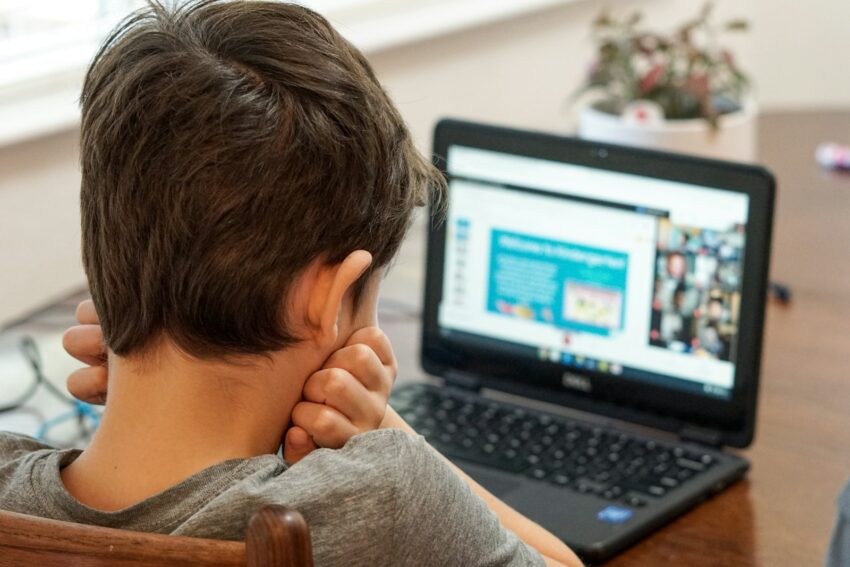
Maybe your child starts a reading lesson willingly but becomes upset ten minutes later. Perhaps worksheets lead to eye rubbing, complaints, or a sudden need for a snack. It is easy to label the problem as boredom, distraction, or resistance.
Sometimes a child is simply tired, hungry, overwhelmed, or ready for a break. Still, when the same reaction appears during reading, writing, or screen-based lessons, it may offer useful clues about how comfortably that child is seeing.
When choosing an eye doctor, Chicago parents may want someone who listens to what happens during real lessons, not just whether a child can identify letters across a room. You are not expected to diagnose a vision problem at the kitchen table. A few clear observations may simply help an eye-care professional understand what your child is experiencing.
Irritability during lessons may have more than one cause
Homeschool parents often know exactly when a lesson begins to unravel. A child who was cheerful during science may become restless during reading. Someone who can spend an hour building with blocks may resist a worksheet after five minutes.
Reading, writing, and math can be challenging for educational, developmental, emotional, and attention-related reasons. Poor sleep, anxiety, noise, hunger, and an uncomfortable workspace can also affect behavior.
Vision-related discomfort is another possibility, but children do not always describe it clearly. Instead of saying, “My eyes feel strained,” a child may complain that the page is boring, rush through the work, ask to stop, or become unusually irritable.
In a study of children with symptomatic convergence insufficiency, complaints about performance during close work were reported more often than direct eye complaints [1]. Convergence insufficiency means the eyes have trouble working together comfortably while looking at something nearby.
This does not make every difficult reading lesson a sign of convergence insufficiency. It does show why parents may want to look at the whole pattern rather than focusing on one behavior.
Possible clues include:
- Squinting while looking at a book or screen
- Rubbing the eyes repeatedly during close work
- Closing or covering one eye
- Tilting the head to see a page
- Holding books or devices unusually close
- Complaining of headaches, tired eyes, or blurry words
- Becoming frustrated at a similar point in each lesson
One rough morning is not much to go on. If the same behavior appears several times, jot down what the child was doing, how long the activity lasted, and whether the discomfort eased after the lesson ended.
Reading habits can reveal useful patterns
Reading asks the eyes to focus at close range and move accurately across each line while the brain handles language and meaning. If close work feels uncomfortable, a child may develop little workarounds without realizing it.
You might notice a child using a finger to keep place, rereading the same sentence, skipping short words, or losing the correct line. Some children bring the page very close, avoid smaller print, or choose audiobooks whenever possible.
Those behaviors can also be connected to reading fluency, attention, language processing, fatigue, or the difficulty of the book. They become more useful to note when they appear alongside headaches, eye strain, double vision, or words becoming blurry after several minutes.
Research has found an association between uncorrected farsightedness and weaker reading or educational outcomes in some groups of children. The authors of a systematic review also stressed that the evidence has limitations and that stronger intervention studies are still needed [2].
In practical terms, vision may affect how comfortable learning feels, but it is only one part of a much larger picture.
You do not need a complicated tracker. A few notes in your planner may be enough. Record which activities trigger frustration, how long the child works before symptoms begin, and whether larger print or better lighting changes anything.
It can also help to compare schoolwork with enjoyable close activities. A child who resists one difficult reader but happily draws for an hour may be reacting to the lesson itself. If discomfort appears during books, crafts, puzzles, and screens, there may be a broader pattern worth sharing with an eye doctor.
Screens and worksheets may make symptoms easier to notice
Digital lessons are useful in many homeschool homes. They can provide videos, interactive practice, virtual classes, and access to subjects a parent may not want to teach alone.
Screens can also make tired or uncomfortable eyes easier to notice. A systematic review of younger screen users found that longer screen use and poor ergonomic conditions were associated with higher digital eye-strain symptom scores. The review did not find convincing evidence that blue-blocking filters prevent digital eye strain [3].
Digital eye strain usually refers to temporary symptoms such as dryness, irritation, tired eyes, headaches, or blurred vision during or after sustained screen use. Children may also blink less when concentrating on a device, which can leave the eyes feeling dry or uncomfortable [4].
Before deciding the curriculum is the problem, try a few simple changes:
- Increase the text size instead of asking the child to move closer.
- Reduce glare from windows and overhead lights.
- Keep the screen at a comfortable distance and near eye level.
- Add short breaks to long digital lessons.
- Alternate screen work with movement, handwriting, discussion, or outdoor activities.
- Remind the child to blink and look across the room during breaks.
Worksheets can cause similar frustration when the print is small, the contrast is poor, or the lighting is uneven. A child may lean over the paper to avoid glare or move closer because the words are difficult to see.
Notice whether enlarging the page, changing the lighting, or moving the workspace helps. Those adjustments may make lessons more comfortable, but ongoing headaches, blur, double vision, or eye pain should still be discussed with an eye-care professional.
When repeated struggles deserve an eye exam
Children often do not complain about blurry vision, especially when only one eye is affected [5]. Parents may notice the behavior first.
Consider arranging an examination when a child regularly squints, closes one eye, complains of headaches after close work, reports blur or double vision, or holds nearly everything close to the face. An eye that turns inward or outward also deserves professional attention.
A vision screening is helpful, but it is not the same as a complete eye examination. If a screening raises a concern, or symptoms such as headaches, blur, double vision, eye pain, or eye strain continue, a full examination may be appropriate [4,6].
Specific examples can make the appointment more useful. “My child hates reading” gives the doctor less information than “After about fifteen minutes of reading, she rubs her eyes, skips lines, and says the words look blurry.”
Bring notes about:
- When the symptoms appear
- How long they usually last
- Whether screens, books, or handwriting trigger them
- Current glasses or contact lenses
- Headaches or reports of double vision
- Family eye history
- Medications and other health conditions
- Recent changes in schoolwork or behavior
An eye exam can identify refractive errors, assess eye alignment, and look for other eye-health concerns. It cannot explain every reading difficulty, attention problem, or emotional response to schoolwork. Educational support, a pediatric evaluation, or another type of assessment may still be useful even when the eyes are healthy.
Chicago Arbor Eye Institute is a multi-location comprehensive ophthalmology and optometry practice serving Chicago and nearby suburbs. Its stated approach includes helping patients and families understand eye conditions, treatment options, and long-term eye health [7]. Dr. Albanis is a board-certified comprehensive ophthalmologist whose professional profile highlights patient and family education [8].
Homeschooling gives parents an unusually close view of how children approach books, worksheets, screens, and detailed activities. You do not have to figure out the cause of every difficult lesson on your own.
When frustration repeatedly appears with squinting, eye rubbing, headaches, blur, double vision, or avoidance of close work, an eye exam can help determine whether vision is making learning harder than it needs to be.
References
[1] Barnhardt, C., Cotter, S. A., Mitchell, G. L., Scheiman, M., Kulp, M. T., & the CITT Study Group. (2012). Symptoms in children with convergence insufficiency: Before and after treatment. Optometry and Vision Science, 89(10), 1512–1520. DOI.
[2] Mavi, S., Chan, V. F., Virgili, G., et al. (2022). The impact of hyperopia on academic performance among children: A systematic review. Asia-Pacific Journal of Ophthalmology, 11(1), 36–51. DOI.
[3] Mataftsi, A., Seliniotaki, A. K., Moutzouri, S., et al. (2023). Digital eye strain in young screen users: A systematic review. Preventive Medicine, 170, 107493. DOI.
[4] American Association for Pediatric Ophthalmology and Strabismus. (2025). Screen time and online learning.
[5] American Association for Pediatric Ophthalmology and Strabismus. (2026). Refractive errors in children.
[6] American Association for Pediatric Ophthalmology and Strabismus. (2024). Vision screening.
[7] Chicago Arbor Eye Institute. (n.d.). Facts about Chicago Arbor Eye.
[8] Chicago Arbor Eye Institute. (n.d.). Chris Albanis, M.D.