
The education of children goes beyond just textbook knowledge; it is more about nurturing their sense of responsibility, independence, and self-discipline in daily life. Children’s electric motorcycles are not only entertainment tools but also excellent educational tools. With proper guidance and regulation, parents can help children develop a sense of responsibility while having fun.
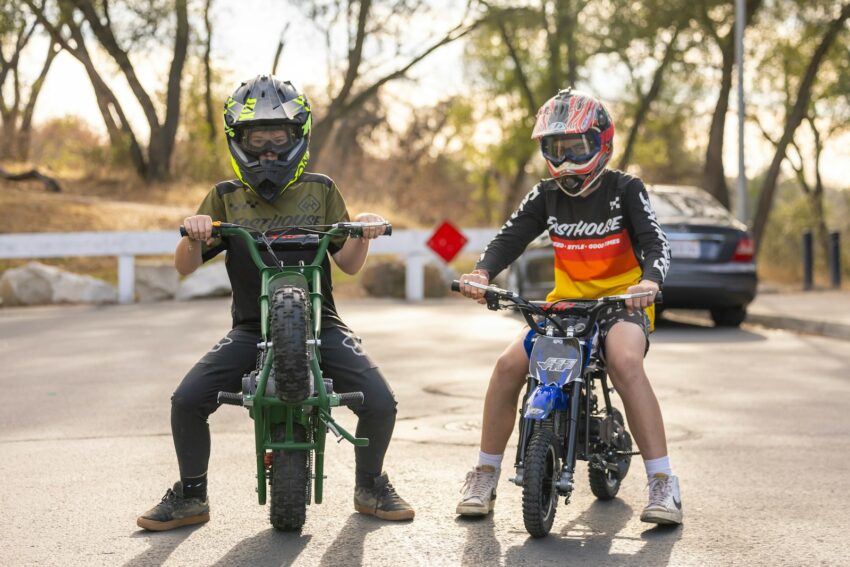
The Foundation of Responsibility: Teaching Children About Motorcycle Management
The first step in developing a sense of responsibility is to help children understand that their kids motorcycle is not just a toy but also a mode of transportation that requires regular maintenance and correct usage. Parents can explain to their children the structure, functions, and importance of maintenance, making sure they understand the value of the motorcycle beyond just a plaything. By doing this, children gradually realize that they are not just users but also need to participate in the management of the motorcycle.
Parents can guide their children on tasks like how to charge the motorcycle, check the battery status, and clean and maintain it. According to Bandura’s self-efficacy theory, children who actively participate in managing the motorcycle (such as charging it and checking the battery) will gain self-confidence and develop a stronger sense of responsibility. Piaget’s cognitive development theory suggests that children in the concrete operational stage can understand cause-and-effect relationships, so when they carry out motorcycle management tasks, they are more likely to comprehend the importance of responsibility. Finally, self-determination theory emphasizes that giving children opportunities to make their own choices can stimulate their intrinsic motivation for responsibility, further promoting the development of a sense of responsibility.
Establishing Rules and Limitations to Build Safety Awareness
The development of responsibility cannot be achieved without setting rules, especially when it comes to riding an electric cruiser motorcycle. Parents can work with their children to establish reasonable rules, ensuring they follow safety regulations while riding. For example, parents can set clear limits on when and where they are allowed to ride, specifying areas where they can and cannot ride. Furthermore, parents should stress the importance of wearing safety gear such as helmets, knee pads, and elbow pads. This is not only a safety requirement but also a responsibility toward themselves.
As children follow these rules, they will gradually place greater importance on safety and learn to act within prescribed boundaries. When children realize that following the rules and staying safe makes them proud, they will develop an awareness of their ability to follow rules and be responsible, which plays a crucial role in fostering responsibility.
Providing Children with Opportunities for Autonomous Choices
When children are given some autonomy in decision-making, they will feel responsible for the outcomes of their choices. For instance, parents can allow their children to choose the color or model of their electric motorcycle from a range of options, like those provided by Hypergogo, which offers various styles and colors. Alternatively, parents could let children decide when they will use the motorcycle. These decisions will make children feel that their choices have an impact on the results, thus fostering an awareness of responsibility in their actions. For example, if they select a specific riding time, they must also ensure the motorcycle is returned on time and properly maintained. Through these methods, children not only develop decision-making skills but also realize the connection between their choices and the responsibilities that come with them.
Enhancing Responsibility Through Role-Playing
Parents can also help children experience the importance of responsibility by engaging in role-playing activities. For example, parents can pretend the child is the motorcycle “owner,” while the parent plays the role of the “mechanic” or “customer,” simulating routine maintenance, riding checks, and other activities. In this process, the child needs to ensure that the motorcycle is safe, ready for use, and equipped with all the necessary safety gear. This role-playing allows children to feel the weight of responsibility in a hands-on way, while also increasing their sense of involvement and achievement.
Additionally, parents can set small tasks or challenges for the child, offering rewards for completing them. For example, tasks such as following traffic rules during a ride, returning the motorcycle on time, or checking safety equipment before riding can all be made into responsibility tasks, with rewards used to encourage continued good behavior.
Increasing Responsibility Through Joint Riding Activities
Family members riding together is an excellent way to enhance a child’s sense of responsibility. Parents can join their children in riding the electric motorcycles and work together to accomplish riding tasks. For instance, parents can create a family riding plan and participate in the activity together. This not only strengthens family interaction but also gives the child the responsibility of leading the ride, ensuring the safety of the route, and so on.
During this experience, the child will realize that they are part of a team, and their behavior and decisions directly affect the overall outcome of the team. The child’s responsibility will gradually develop, especially when they need to take care of others’ safety and needs. This experience will make them more mindful of their own actions.
Motivation and Feedback: Cultivating Long-term Responsibility
Building a sense of responsibility is a long-term process, so parental motivation and feedback are essential. Whenever a child completes a responsibility task related to the electric motorcycle, parents can offer positive feedback and encouragement, helping the child feel that their efforts are being recognized. For instance, when the child charges the motorcycle on time or checks the motorcycle’s safety, parents can praise their attentiveness and emphasize that such behaviors reflect responsibility.
At the same time, parents should guide children when mistakes occur. For example, if the child forgets to return the motorcycle on time or fails to check the battery, parents can discuss the reasons for the mistake and help them devise a plan to improve. This constructive feedback helps children understand that responsibility is not just about completing tasks but also about valuing the process and improving it. According to behavioral theory, positive reinforcement shows that when children complete tasks and are rewarded, they will develop good responsibility habits.
Conclusion
Through children’s electric motorcycles, parents can teach their children how to take responsibility through play and entertainment. Whether through managing items, following safety rules, making autonomous decisions, or role-playing, children gradually understand the importance of responsibility and learn how to take responsibility in daily life. Parental patience, guidance, and positive feedback are key to this process. Only through long-term nurturing and consistent encouragement can children truly appreciate the importance of responsibility in their growth.